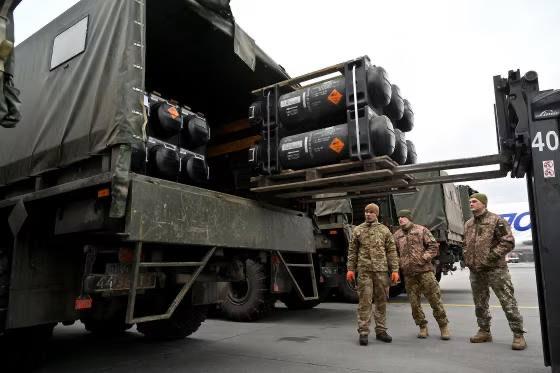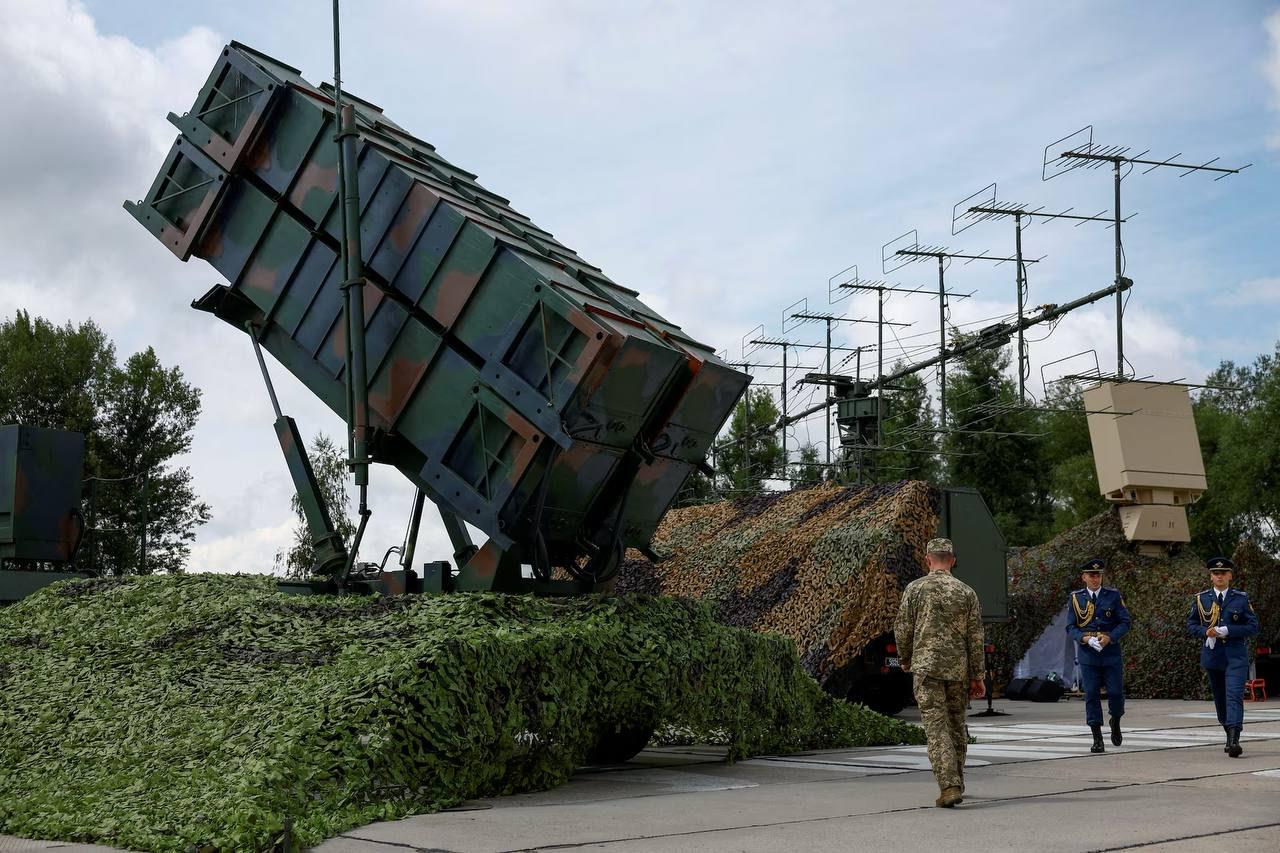

(Phnom Penh): For decades, the United States has been regarded as the backbone of European security. Washington has stationed troops across Europe, extended its nuclear umbrella to allies, underpinned NATO, and, since Russia’s full-scale invasion of Ukraine in 2022, provided Kyiv with tens of billions of dollars in military assistance and weapons.
But remarks by U.S. President Donald Trump on September 3, 2026, appeared to signal a shift in direction: Europe should shoulder more of the financial burden, while the United States seeks to retain more weapons for its own needs.
Trump said his administration would seek reimbursement from European countries for military assistance and weapons previously provided by the United States to Ukraine. At the same time, he said Washington was increasing production and stockpiling weapons “for the United States” rather than selling them to other countries. Reuters reported that the remarks came amid concerns over pressure on U.S. weapons inventories from their use in the war with Iran.
Against this backdrop, a larger question emerges: Is the White House reshaping America’s security policy toward Europe, or is the United States simply running short of money?
It Is Not About America “Running Out of Money” — It Is About Who Should Pay
The United States remains one of the world’s largest economic powers. So why does Trump want Europe to reimburse Washington for weapons and military assistance provided to Ukraine?
From Trump’s perspective, the Russia-Ukraine war is taking place in Europe, and the direct security threat posed by Russia is greater for European countries than for the U.S. homeland. His argument, therefore, is that Europe should commit more of its own financial resources to supporting Ukraine rather than continue relying heavily on American taxpayers.
That logic is consistent with Trump’s “America First” approach: U.S. allies can continue to benefit from American security support, but they should contribute more toward the cost.
An important distinction, however, must be made.
Asking European countries to pay for U.S.-made weapons for Ukraine going forward is different from asking Europe to reimburse Washington for assistance already provided under the Biden administration.
Trump’s call for repayment of past assistance remains a political demand and a potential subject for negotiation. It does not, by itself, mean that European governments have an established legal debt that they are already obligated to repay to the United States.
Europe Has Already Begun to Pay While America Supplies the Weapons
Trump’s approach is not limited to political rhetoric. A model under which allies increasingly finance U.S.-supplied weapons for Ukraine has already begun to take shape.
One example is the Prioritised Ukraine Requirements List (PURL), a NATO-coordinated mechanism launched in 2025.
Under the mechanism, Ukraine’s priority military requirements are matched with weapons and ammunition that the United States can supply. NATO allies and partners then provide funding for packages of U.S. military equipment to be delivered to Ukraine.
According to NATO, by June 2026, allies and partners had pledged more than $6 billion through PURL to finance U.S.-sourced military equipment for Ukraine, with more than two-thirds of NATO allies participating in the mechanism.
Reuters also reported in July 2025 on an arrangement under which European allies could transfer weapons from their own inventories to Ukraine and subsequently purchase U.S.-made systems to replenish their stocks.
The emerging change, therefore, is not necessarily that the United States is withdrawing from its role in European security. Rather, it is a change in how that security is financed.
That is a central feature of the policy direction Trump is pursuing: Washington does not necessarily have to abandon its alliances, but it wants to change who pays for the security those alliances provide.
The Iran War Is Putting Additional Pressure on U.S. Weapons Stockpiles
If supplying Ukraine were the only major demand on U.S. weapons inventories, managing the problem would be easier. But in 2026, the United States has also been consuming significant quantities of munitions in its war with Iran.
Reuters reported on March 6 that Trump met the chief executives of seven major defense companies as the Pentagon sought to increase production and replenish weapons used in operations against Iran and other military campaigns.
On March 26, Reuters also reported that the Pentagon had considered whether some weapons intended for Ukraine should instead be diverted to the Middle East, as the Iran war placed additional pressure on critical U.S. munitions inventories.
This illustrates a simple but fundamental strategic constraint: a weapon cannot be used in two places at the same time.
If a missile must be retained to defend U.S. troops and bases against Iranian attacks, that same missile cannot simultaneously be sent to Ukraine. Conversely, if Washington transfers too many critical weapons to Kyiv, it risks reducing inventories the Pentagon may want to preserve for other contingencies.
Why Is Trump Saying America Should Keep Weapons for Itself?
This is where Trump’s remarks about keeping weapons for the United States become strategically more significant than his demand for European reimbursement.
On September 3, Trump said the United States was increasing production, replenishing its inventories and stockpiling weapons for its own use rather than selling them to other countries, although he indicated that foreign arms sales could resume later.
The remarks suggest that U.S. military readiness is being given greater priority.
Washington is not dealing only with Iran and Ukraine. It must also maintain the capabilities required to uphold NATO commitments, support allies in the Middle East and prepare for potential contingencies in the Indo-Pacific.
That creates a fundamental question for U.S. defense planners: If America continues selling or transferring weapons abroad, how much will it have left for itself?
Conclusion
Trump’s demand that Europe reimburse the United States should therefore not be interpreted simply as evidence that America is “running out of money.”
The larger issue is that Washington is confronting three challenges at the same time: Who should bear the financial burden? How quickly can the U.S. defense industry replenish depleted weapons inventories? And how much military equipment must the Pentagon preserve for America’s own security requirements?
Support for Ukraine has required the United States to draw weapons from its own inventories. The war with Iran has added further pressure on those stockpiles, while Washington cannot ignore its security commitments in Europe, the Middle East or the Indo-Pacific.
The direction now emerging is therefore clear: Europe is being asked to assume a greater share of the financial burden, while the United States continues to produce and supply weapons but seeks to retain more critical military capabilities for its own security.
In short, Trump does not necessarily appear intent on ending America’s role as a guarantor of European security. Instead, he is seeking to rewrite the burden-sharing formula — moving away from a model in which “America provides and America largely pays” toward one in which “America continues to provide, but Europe pays more for its own security and for supporting Ukraine.”
In this sense, Trump’s demand for European reimbursement and his insistence on keeping more weapons for the United States can be seen as two sides of the same policy: reducing America’s financial burden while preserving its military strength.