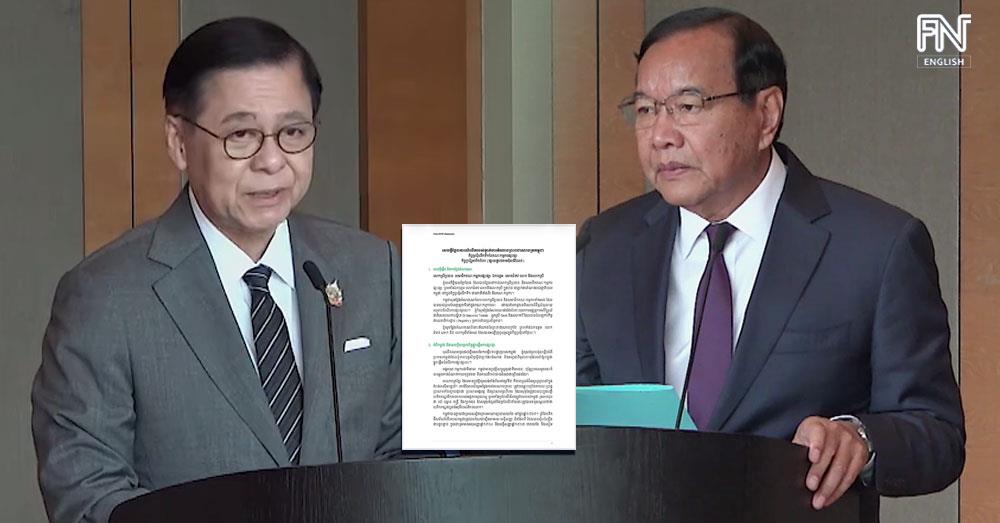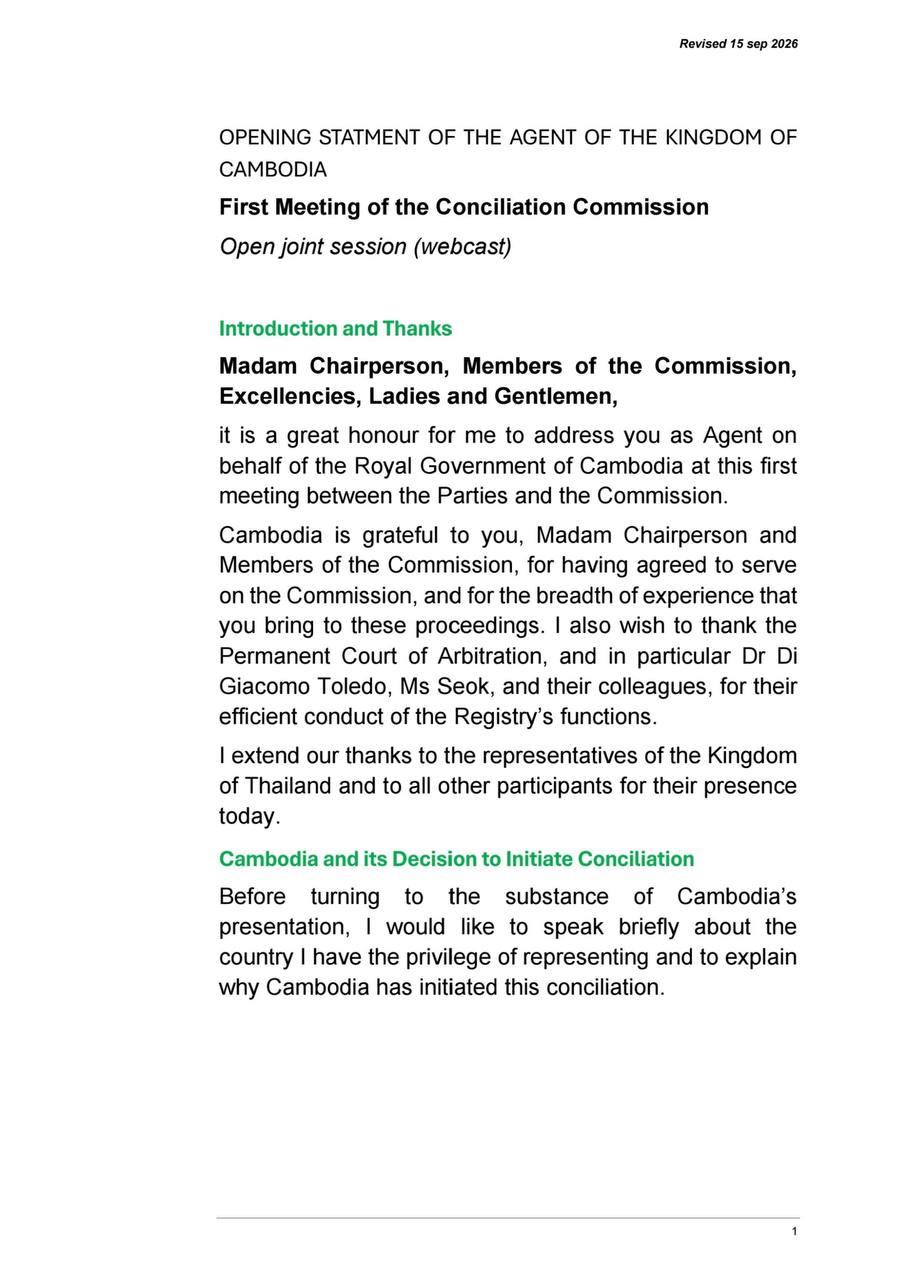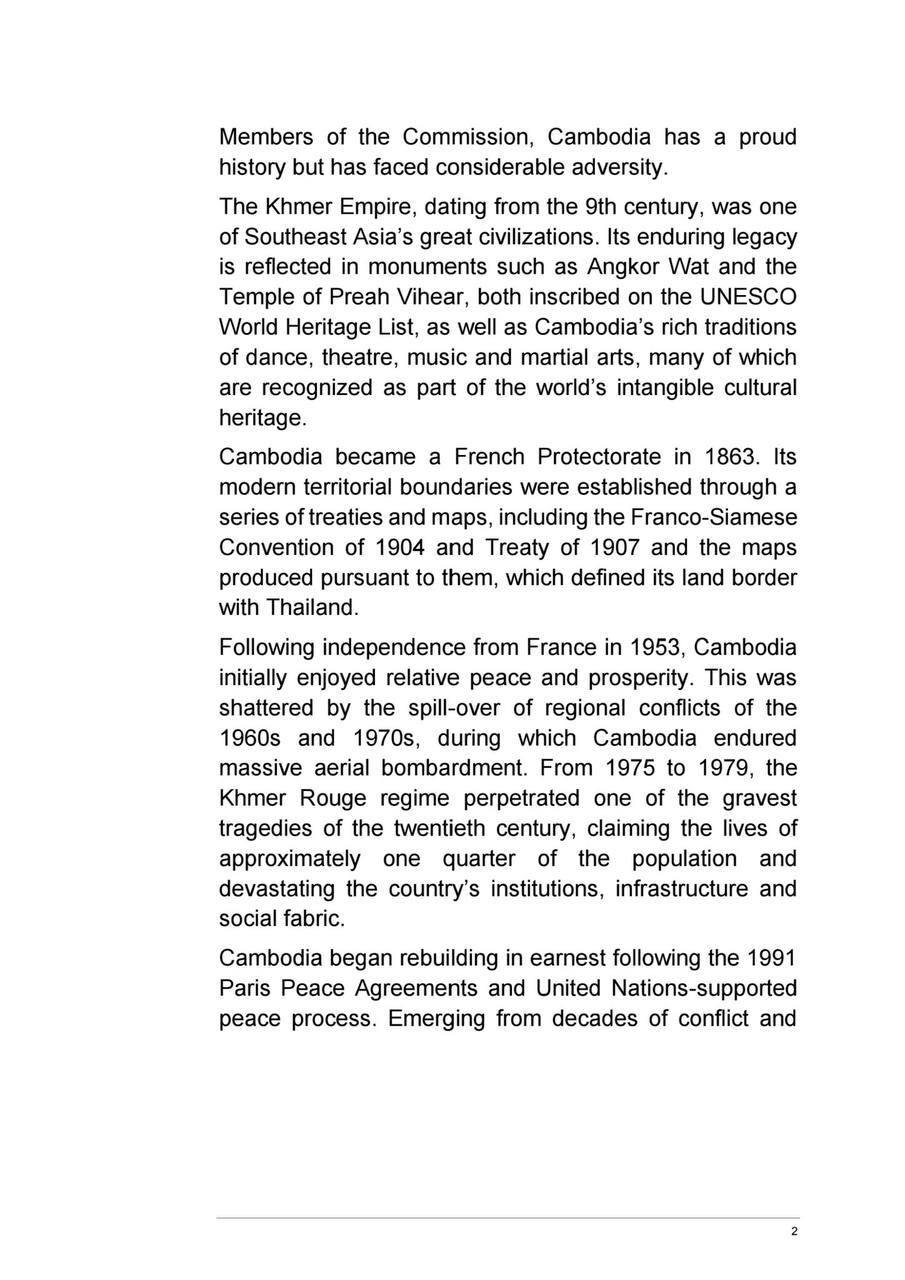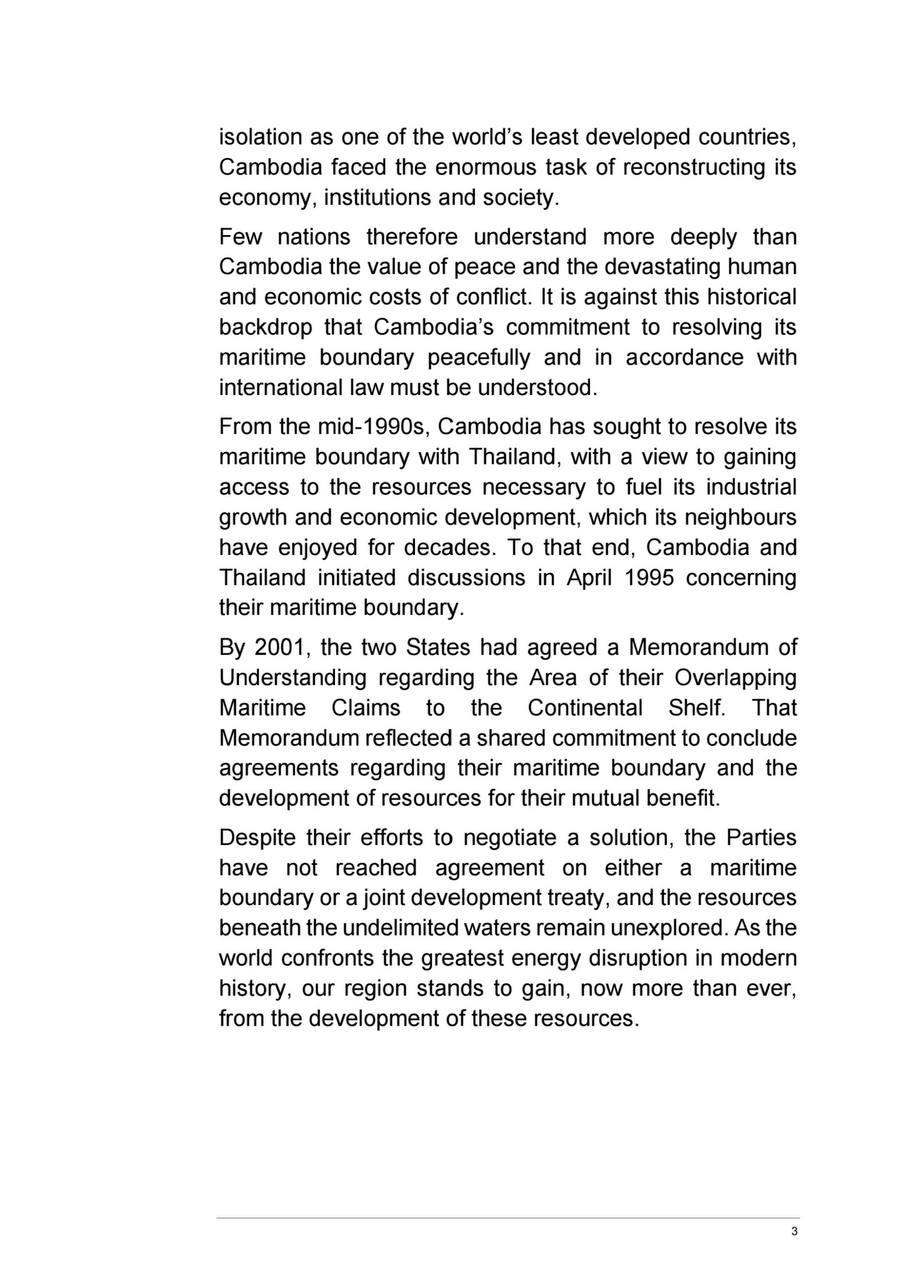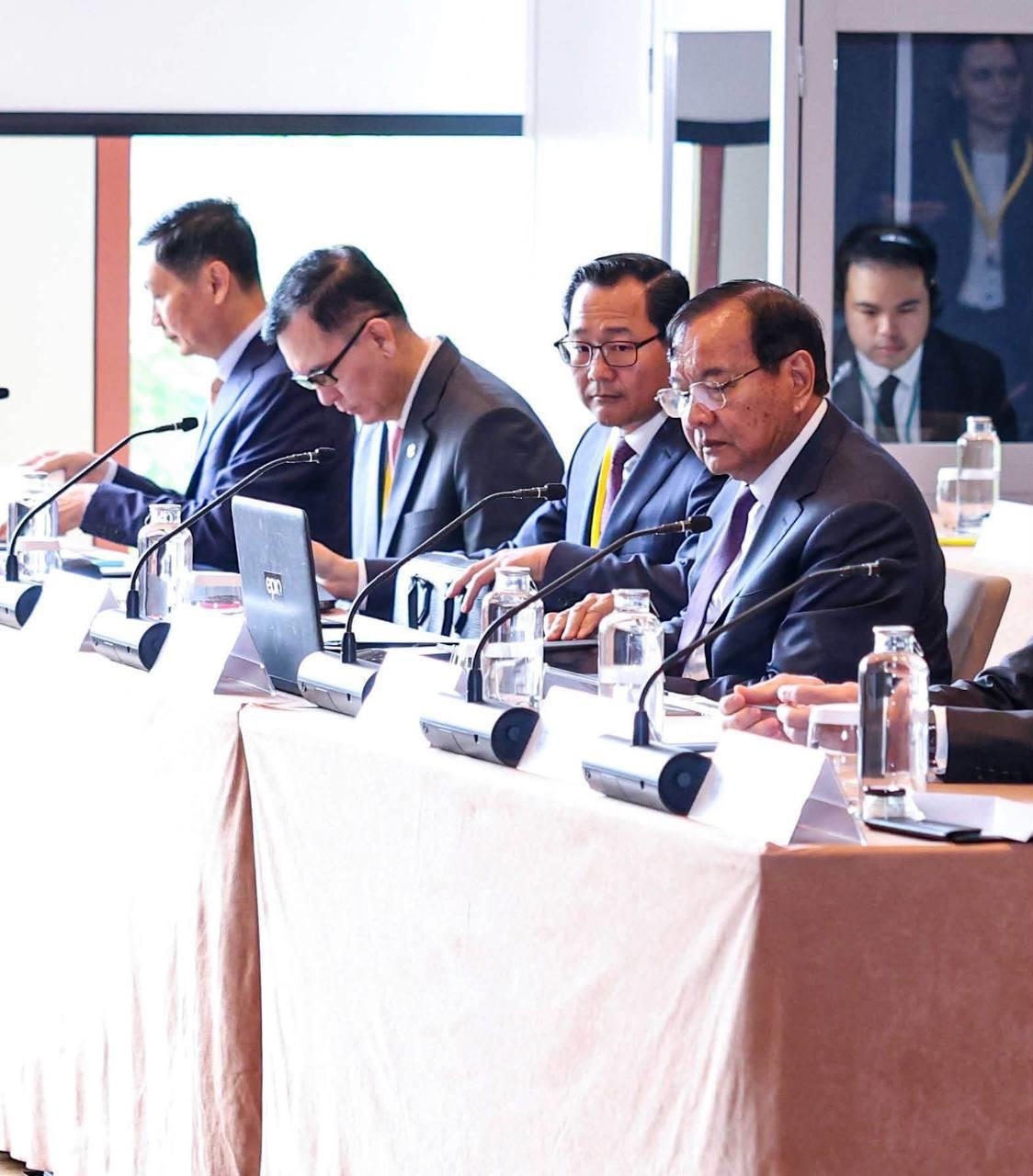

(Singapore): Cambodian Foreign Minister Prak Sokhonn reaffirmed Cambodia’s commitment to international law and the peaceful settlement of disputes, expressing hope that Thailand will engage constructively in the UNCLOS conciliation process aimed at resolving the two countries’ maritime boundary issues.
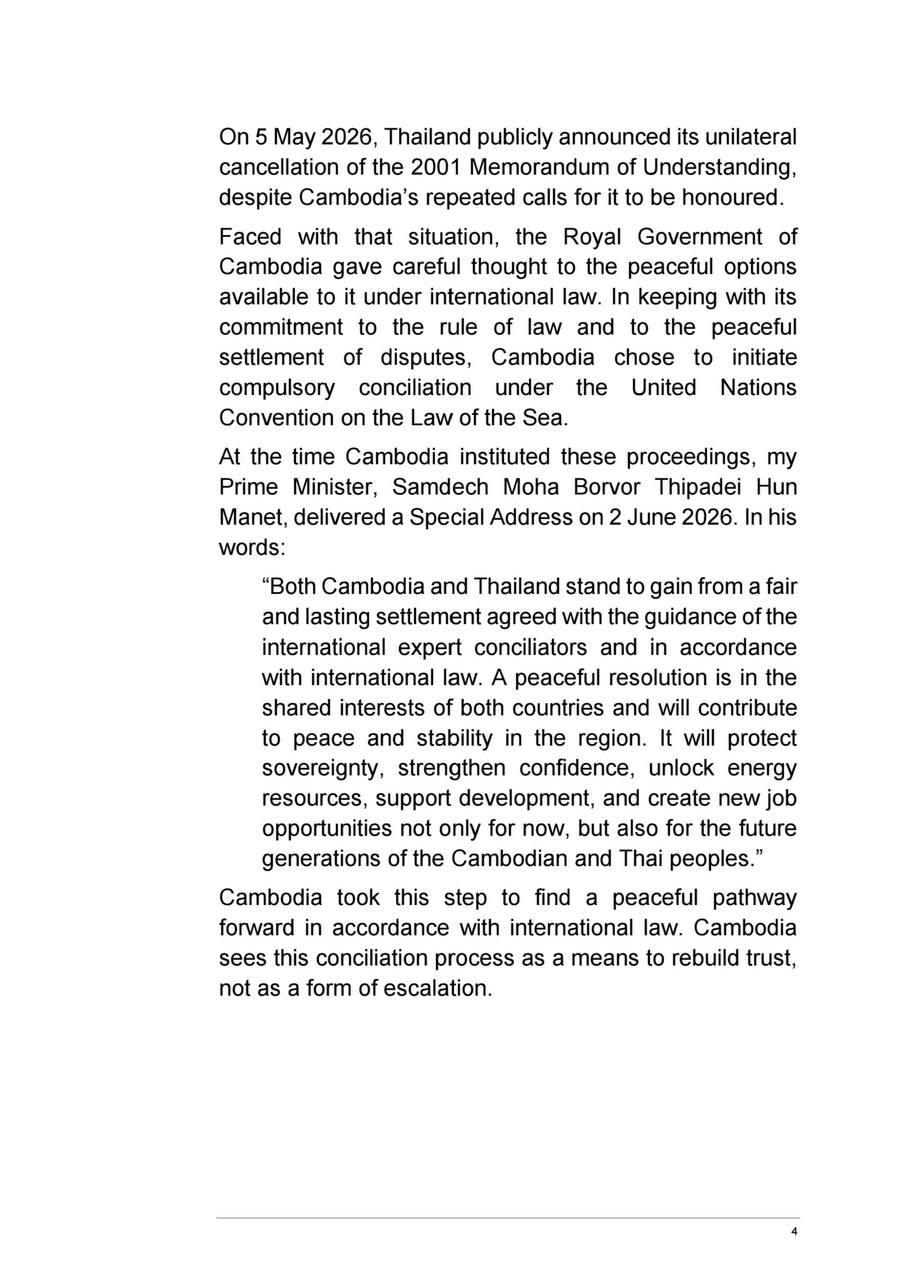
Speaking at the opening of the first Cambodia-Thailand UNCLOS Conciliation Meeting in Singapore on Tuesday (Sep. 15), Prak Sokhonn stressed that Cambodia initiated the process in pursuit of a peaceful solution, rather than as an act of escalation.
“Cambodia took this step to find a peaceful pathway forward in accordance with international law. Cambodia sees this conciliation process as a means to rebuild trust, not as a form of escalation,” he said.
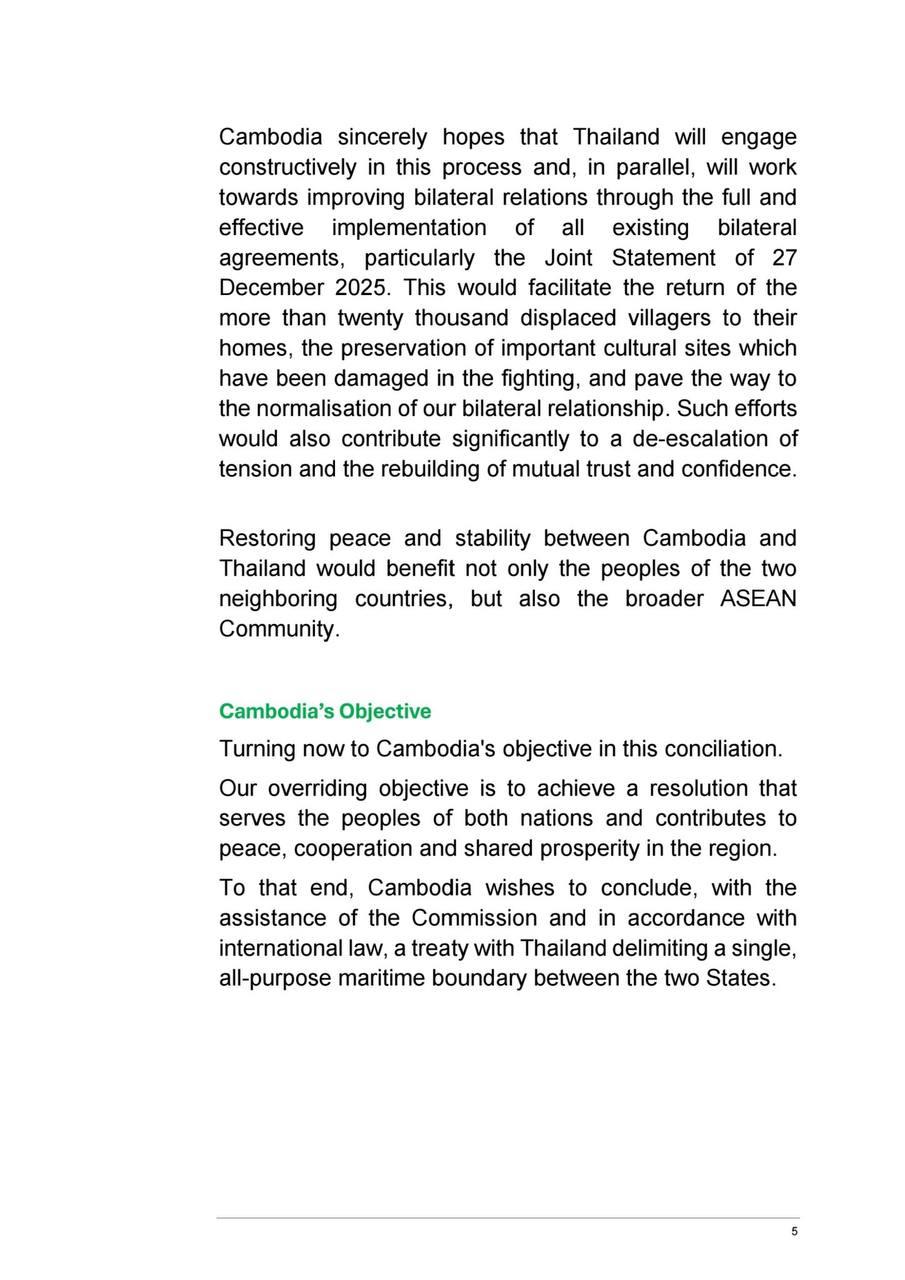
The foreign minister expressed hope that Thailand would participate constructively in the conciliation while simultaneously working with Cambodia to improve bilateral relations through the full and effective implementation of existing agreements, particularly the Joint Statement of 27 December 2025.
He said such efforts could help facilitate the return of more than 20,000 displaced villagers to their homes, preserve important cultural sites damaged during the fighting, ease tensions and pave the way towards normalising bilateral relations.
“Restoring peace and stability between Cambodia and Thailand would benefit not only the peoples of the two neighboring countries, but also the broader ASEAN Community,” he added.
Turning to Cambodia’s objectives in the conciliation, Prak Sokhonn said the Kingdom’s overriding goal is to reach a resolution that serves the interests of both peoples while promoting peace, cooperation and shared prosperity in the region.
Cambodia, he said, seeks to conclude, with the Commission’s assistance and in accordance with international law, a treaty with Thailand delimiting a single, all-purpose maritime boundary between the two countries.
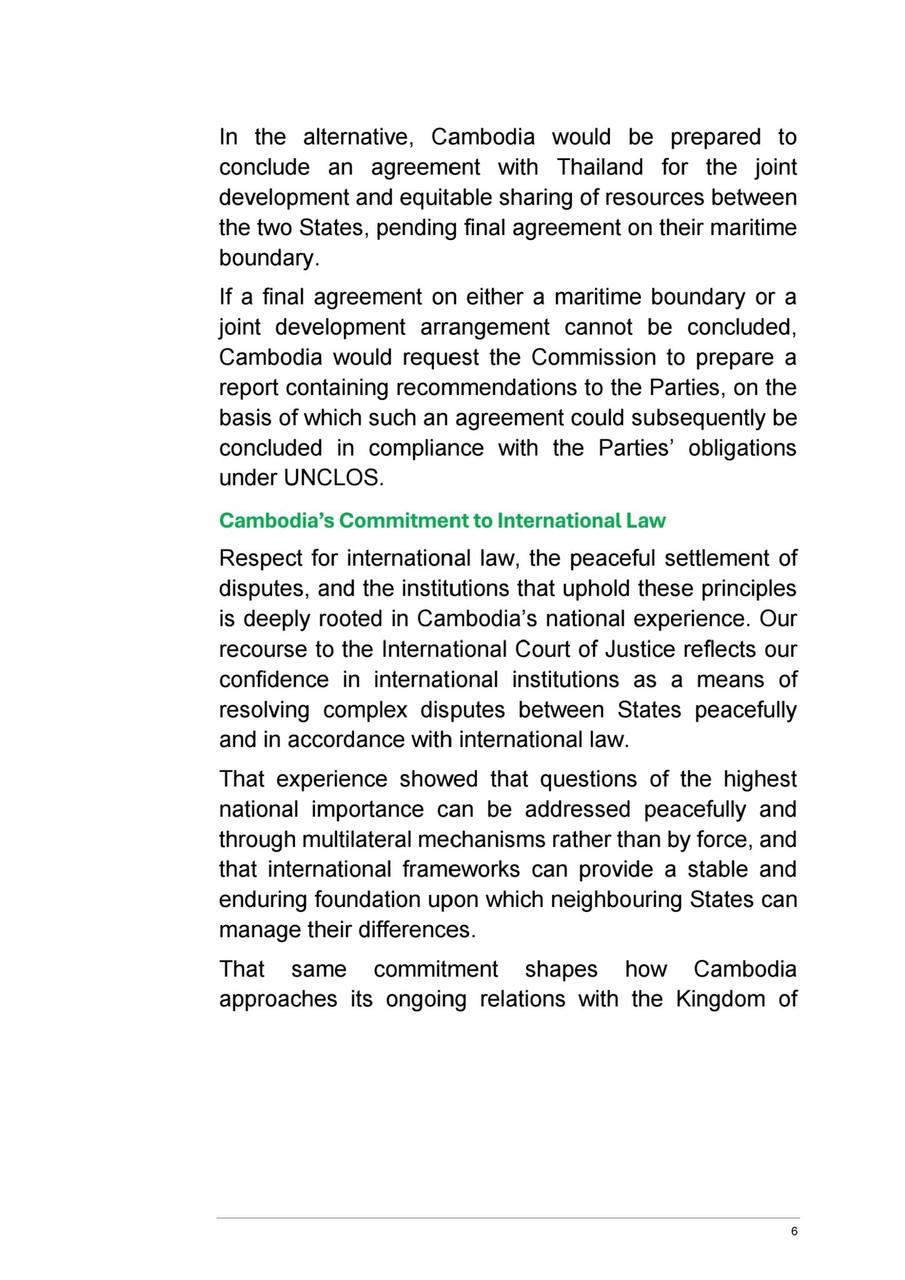
As an alternative, Cambodia would be prepared to reach an agreement with Thailand on the joint development and equitable sharing of resources pending a final settlement of their maritime boundary.
Should neither a maritime boundary treaty nor a joint development arrangement be concluded, Cambodia would request the Commission to issue recommendations that could provide a basis for a future agreement consistent with both countries’ obligations under UNCLOS.
Prak Sokhonn underscored that Cambodia’s approach is rooted in its longstanding reliance on international law and institutions to peacefully resolve disputes of major national importance, including through recourse to the International Court of Justice.
“That experience showed that questions of the highest national importance can be addressed peacefully and through multilateral mechanisms rather than by force,” he said, adding that international frameworks can provide a stable and enduring foundation for neighbouring countries to manage their differences.
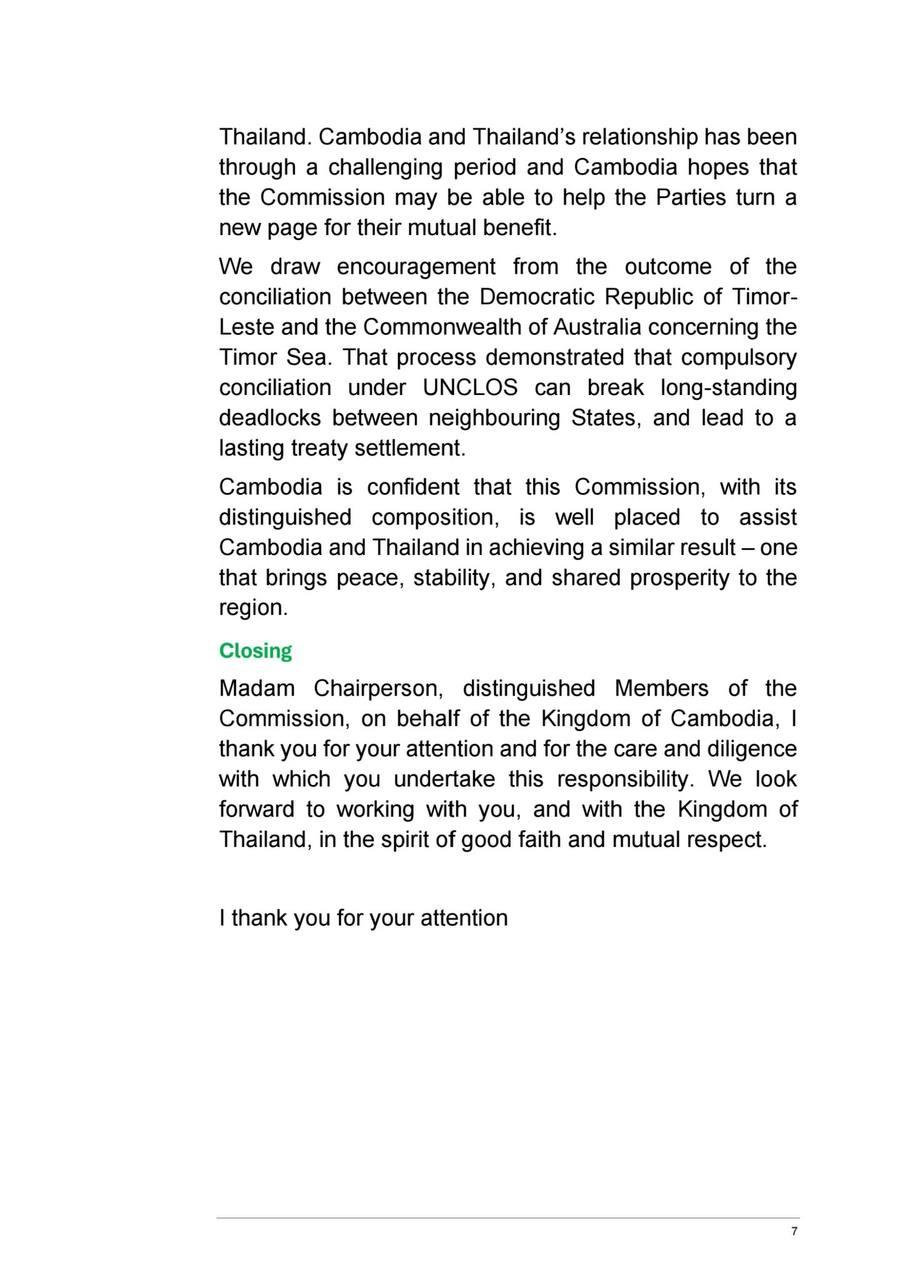
Acknowledging that Cambodia-Thailand relations have gone through a challenging period, the foreign minister expressed hope that the Conciliation Commission could help both countries “turn a new page for their mutual benefit.”
He also cited the successful UNCLOS conciliation between Timor-Leste and Australia over the Timor Sea as an encouraging precedent, noting that the process helped break a longstanding deadlock between neighbouring states and ultimately led to a treaty settlement.
“Cambodia is confident that this Commission, with its distinguished composition, is well placed to assist Cambodia and Thailand in achieving a similar result – one that brings peace, stability, and shared prosperity to the region,” Prak Sokhonn concluded.
=FRESH NEWS