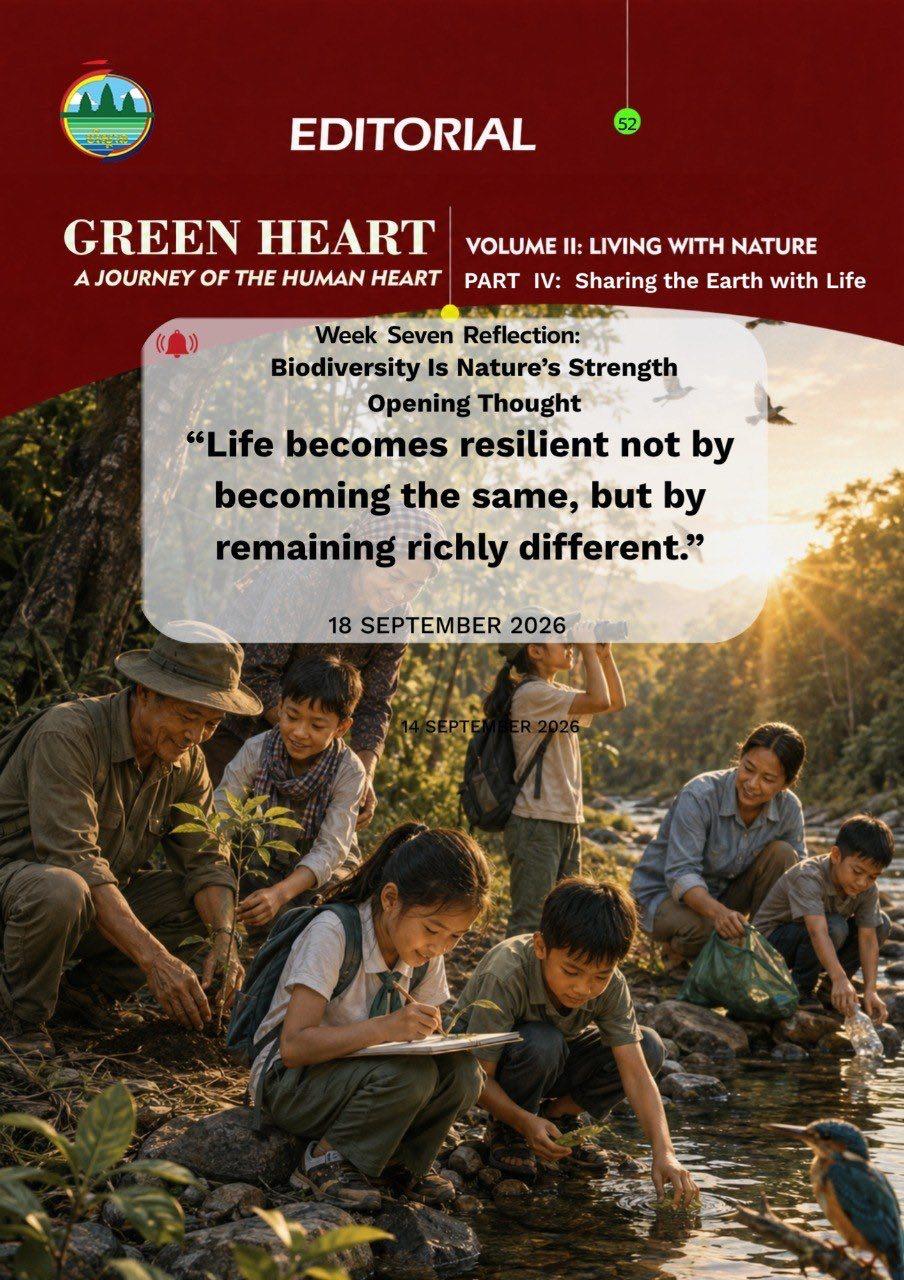

(Phnom Penh): Biodiversity means the variety of life. It includes diversity within species, among species, and across ecosystems. It is not simply a count of famous animals. It includes genes, microorganisms, plants, fungi, insects, habitats, and relationships.
Why does variety matter? Different species perform different ecological roles. Genetic diversity can give populations more possibilities for responding to disease or changing conditions. Diverse ecosystems may support multiple pathways for processes such as pollination, decomposition, and nutrient cycling.
Greater diversity does not guarantee that every ecosystem will withstand every disturbance. Relationships are complex, and some species have especially important roles. Still, biodiversity generally expands the options from which ecological resilience can grow.
Human societies depend on this richness. Crops have wild relatives and genetic varieties that may hold useful traits. Medicines and materials have emerged from living organisms. Fisheries, forests, tourism, culture, water, and food security all connect with biodiversity.
Value is not limited to usefulness. A species represents a unique way of being alive, shaped through a long evolutionary history. Extinction closes that possibility permanently.
Threats include habitat loss, overuse, pollution, invasive species, climate change, and disease, often interacting. Protection includes conserving habitat, using resources sustainably, controlling harmful pathways, restoring ecosystems, reducing pollution, and addressing climate risks.
Biodiversity can exist close to home. A schoolyard with varied, suitable plants may host more insects and birds than a bare area. A healthy soil sample contains diversity invisible to the eye. Local nature deserves attention even when it lacks large animals.
We must avoid introducing species carelessly in the name of diversity. More species in a place is not always better if some do not belong and cause harm. Ecological fit matters.
Human diversity offers a helpful parallel, though people and ecosystems are not identical. Communities benefit when different knowledge, experience, and abilities are respected.
Nature’s strength is not a single strongest creature. It is the living richness of relationships. Protecting biodiversity means keeping Earth’s library of life open for chapters still unwritten.
Libraries also require careful records. Scientists, Indigenous peoples, local communities, museums, and citizen observers all contribute knowledge about species and ecosystems. Sharing information responsibly helps societies notice decline, guide protection, and recognize recovery.
Knowledge kept with respect can become shelter for life.
Buddhist Reflection
Equanimity values beings without dividing them into those worthy and unworthy of care. Wisdom recognizes difference without turning difference into hierarchy. Biodiversity invites both attitudes.
Today’s Reflection
Which kind of diversity—genetic, species, or ecosystem—was new to me?
Today’s Action
Count distinct types of plants or animals visible in one safe area. Repeat later in a different habitat and compare without collecting.
Today’s Pledge
Today I will celebrate life’s variety and protect the relationships that allow it to continue.
When we protect nature, we protect all beings—including ourselves.
=FRESH NEWS