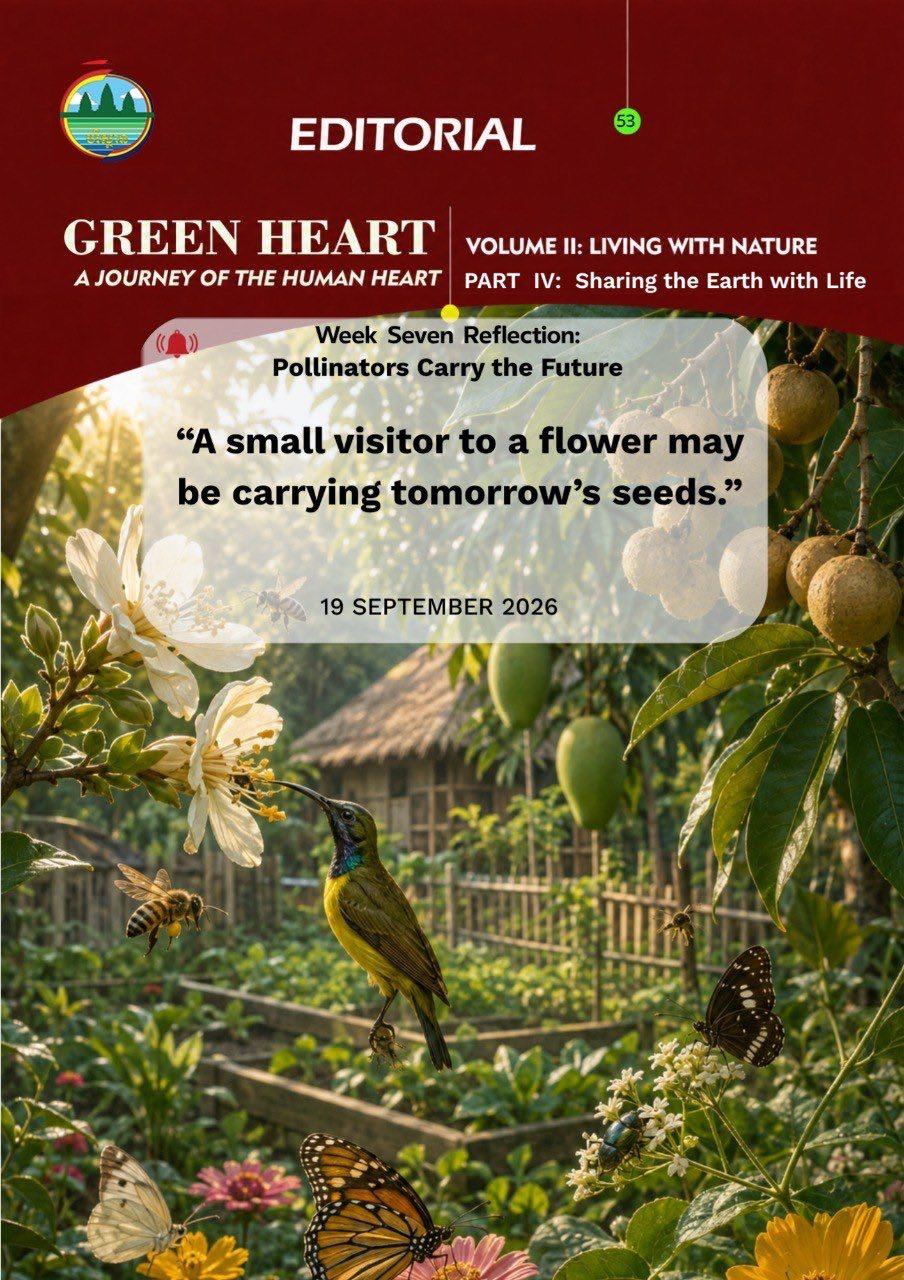

(Phnom Penh): A flower is more than color and fragrance. It is part of a plant’s reproductive system.
“A small visitor to a flower may be carrying tomorrow’s seeds.”
Pollination occurs when pollen is transferred so that fertilization can take place. This may happen through wind, water, or animals.
Bees are well-known pollinators, but butterflies, moths, flies, beetles, birds, bats, and other animals pollinate particular plants. Their roles vary by ecosystem and region.
Many wild plants and important crops depend at least partly on animal pollination.
Pollination does not mean that every flower becomes fruit.
Weather, plant health, compatible pollen, timing, and other conditions matter. The relationship is delicate: the pollinator seeks food, while the plant gains an opportunity to reproduce.
Pollinators need more than flowers for a few days. They may require food across seasons, nesting sites, host plants for young stages, water, shelter, and protection from harmful chemicals.
A garden designed for them should offer suitable local plants and avoid invasive species.
Pesticides can be necessary in some circumstances, especially for food production or health, but misuse can harm pollinators and other organisms.
Following labels, expert guidance, timing, dosage, and integrated pest-management approaches can reduce risk.
Fear can also create harm. Many pollinators do not attack people, but some can sting or bite when threatened.
Observe from a respectful distance, do not disturb nests, and seek adult or professional help when safety is involved.
Students can support pollinators by protecting flowering plants, learning local species, reducing needless chemical use, and creating small habitat areas with permission.
Even a few appropriate plants can become stepping stones in a developed landscape.
Pollinators teach us about overlooked service.
A tiny insect may contribute to fruit, seeds, and future plants without receiving human applause. Much of life depends on work performed quietly.
Watch a flower long enough and it may become a meeting place. The visitor arrives, feeds, and leaves carrying more than it intended. In that movement, the future travels on wings.
We can make our own movement beneficial in the same way.
A student who learns one pollinator’s name and shares it respectfully may carry curiosity into a classroom or family, helping protective habits spread beyond one garden.
Education, like pollen, gains power when it travels.
Buddhist Reflection
Right livelihood and service need not seek recognition. Pollinators remind us that an ordinary activity can support many lives. Goodness often spreads as a natural consequence of living in relationship.
Today’s Reflection
What does a pollinator need during the times when few flowers are blooming?
Today’s Action
Observe flowers safely for ten minutes and count visitors. Do not touch insects or nests. Learn one suitable local pollinator plant.
Today’s Pledge
Today I will protect the small travelers who help carry life into the future.
When we protect nature, we protect all beings, including ourselves.
=FRESH NEWS