
(Phnom Penh): When a president is unhappy with how the media reports on him, he can criticize the coverage, challenge it with evidence, or speak directly to the public. But the latest confrontation between President Donald Trump and the American news media has moved beyond a war of words.
Trump has barred CNN, MS NOW and Politico from the White House. The dispute then widened when other major television networks — ABC, CBS, NBC and Fox News — declined to replace CNN in its scheduled rotation for providing White House TV pool coverage of the president.
At the same time, CNN, MS NOW and Politico filed a lawsuit against the Trump administration challenging the restrictions.
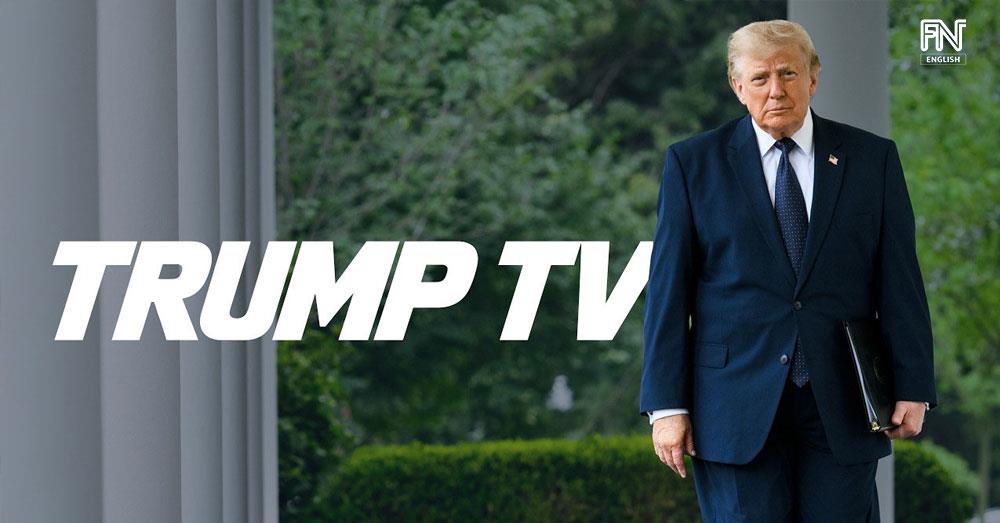
Then, on September 21, as the media dispute intensified and TV pool coverage was suspended, the White House launched its own 24-hour video stream, “TRUMP TV: The Essentials Station.”
These developments are unfolding at a politically sensitive moment, as the United States moves closer to the midterm elections, when control of Congress will be at stake.
The latest confrontation erupted on September 18, 2026, when Trump announced that CNN, MS NOW and Politico would be barred from the White House, accusing the organizations of spreading “fake news” and treating him unfairly.
A day later, on September 19, journalists from the three organizations were denied entry to the White House.
The dispute then expanded beyond disagreements over news coverage into broader questions involving access to the president, press freedom and control over the White House press pool.
On September 21, CNN, MS NOW and Politico sued the Trump administration, arguing that the restrictions violated the First Amendment and their due process rights.
That same day, the confrontation entered another phase when major television networks declined to replace CNN in the TV pool rotation, while the White House launched Trump TV.
The controversy therefore extends beyond a dispute between Trump and three news organizations. It raises a larger question: Who should have the power to determine which journalists can gain access to the president, who can question him, and who controls the images the public sees — particularly in the run-up to the midterm elections?
From Criticizing the Media to Determining Access to the President
Donald Trump has a long history of criticizing news organizations whose reporting he considers inaccurate or unfair to him.
But the latest dispute goes a step further. It shifts the issue from criticism of media coverage to a more fundamental question: Which news organizations should be able to gain access to the president to gather information and ask questions?
The White House press pool is a small group of journalists assigned to follow the president in places or at events where it is impossible to accommodate the entire White House press corps.
Pool reporters gather information, take photographs and video, ask questions, and share their reporting with other news organizations.
The Associated Press has reported that during Trump's second term, the White House has taken a greater role in determining which journalists participate in the press pool.
The dispute, therefore, is no longer simply about whether Trump likes or dislikes CNN. It raises a broader institutional question: Who should determine which journalists can follow, question and report directly on the president — the White House or the news organizations?
That is what makes the latest Trump–media confrontation more than a disagreement over news coverage. It has developed into a broader dispute over access to the president and the independence of the press.
Television Networks Respond: Declining to Replace CNN
September 21 was CNN's scheduled turn to perform TV pool duties at the White House. But because CNN had been barred from entering the White House, it could not fulfill its assignment.
ABC, CBS, NBC and Fox News subsequently declined to take CNN's place, resulting in a suspension of TV pool coverage.
That suspension did not mean the networks had stopped covering Trump altogether. Rather, they declined to substitute for CNN within the TV pool arrangement.
On the same day, CNN, MS NOW and Politico sued the Trump administration, arguing that the government could not revoke White House press access to punish news organizations for coverage it disliked.
The Trump administration, by contrast, has argued that the First Amendment does not automatically guarantee any news organization access to the White House or a place in the press pool.
The disagreement has therefore moved from a dispute over media coverage into a legal battle involving press freedom, press access and the White House's authority to determine who receives access.
The courts will now have to consider the competing legal arguments.
As the TV Pool Is Suspended, Trump TV Arrives
On the same day, September 21, the White House launched “TRUMP TV: The Essentials Station,” a 24-hour video stream featuring speeches, videos and highlights of the Trump administration's activities.
The timing creates a striking contrast: As the shared TV pool operation involving independent news organizations was suspended, the White House launched a video channel of its own.
Trump TV allows the White House to select the speeches, videos and events it wants to present directly to viewers.
But Trump TV and independent journalism perform fundamentally different functions.
Trump TV can serve as a direct source of information from the administration, but it does not perform the same function as independent journalism. One is government communication to the public; the other is expected to observe, question, verify and independently scrutinize those in power.
The fact that Trump TV was launched as the TV pool dispute intensified does not, by itself, establish that it was created to replace independent media. But the timing highlights an increasingly important distinction between government-controlled communication and independently produced journalism.
Why Do the Midterms Make This More Significant?
The confrontation is taking place at a politically sensitive moment as the United States approaches the midterm elections.
A Reuters/Ipsos poll released on September 21 found Trump's job approval rating at 32% among U.S. adults surveyed.
In the same poll, among registered voters, 43% said they would support Democratic congressional candidates, compared with 35% who said they would support Republican candidates.
A single opinion poll, of course, cannot predict an election result. It does, however, provide a snapshot of the political environment at the time the survey was conducted.
Against this backdrop, the ability to communicate directly with the public takes on greater political significance.
Trump has long used social media, rallies and speeches to communicate directly with his supporters. Trump TV now provides the White House with another channel through which it can deliver its message directly to the public without first passing through the editorial selection and interpretation of traditional news organizations.
What remains to be seen is how effective Trump TV will be as a tool for the White House to communicate directly with the public and voters without relying on traditional media channels as it has in the past.
Conclusion
The latest confrontation between Trump and the news media is about more than Trump versus CNN.
It has developed into a broader dispute involving access to the president, accountability and control over information.
The White House asserts its authority to determine who is granted access to the president. News organizations, meanwhile, argue that the government cannot revoke press access as punishment for reporting it dislikes.
That legal dispute has now reached the courts.
At the same time, Trump TV has created another avenue for the White House to communicate directly with the public without first going through traditional news organizations.
As the United States moves closer to the midterm elections, one of the key questions to watch is therefore:
How will U.S. courts define the boundary between the White House's authority to control access to the president and the freedom of the press protected by the Constitution?