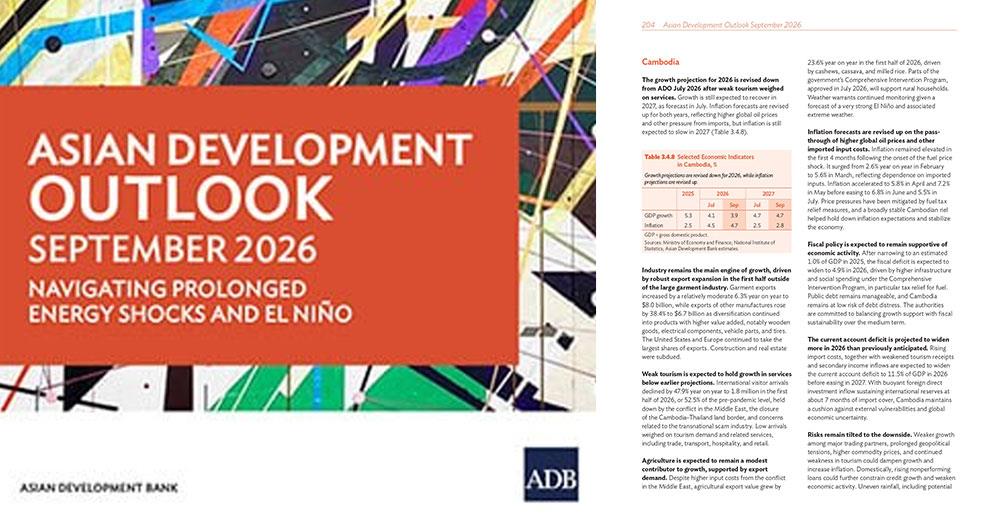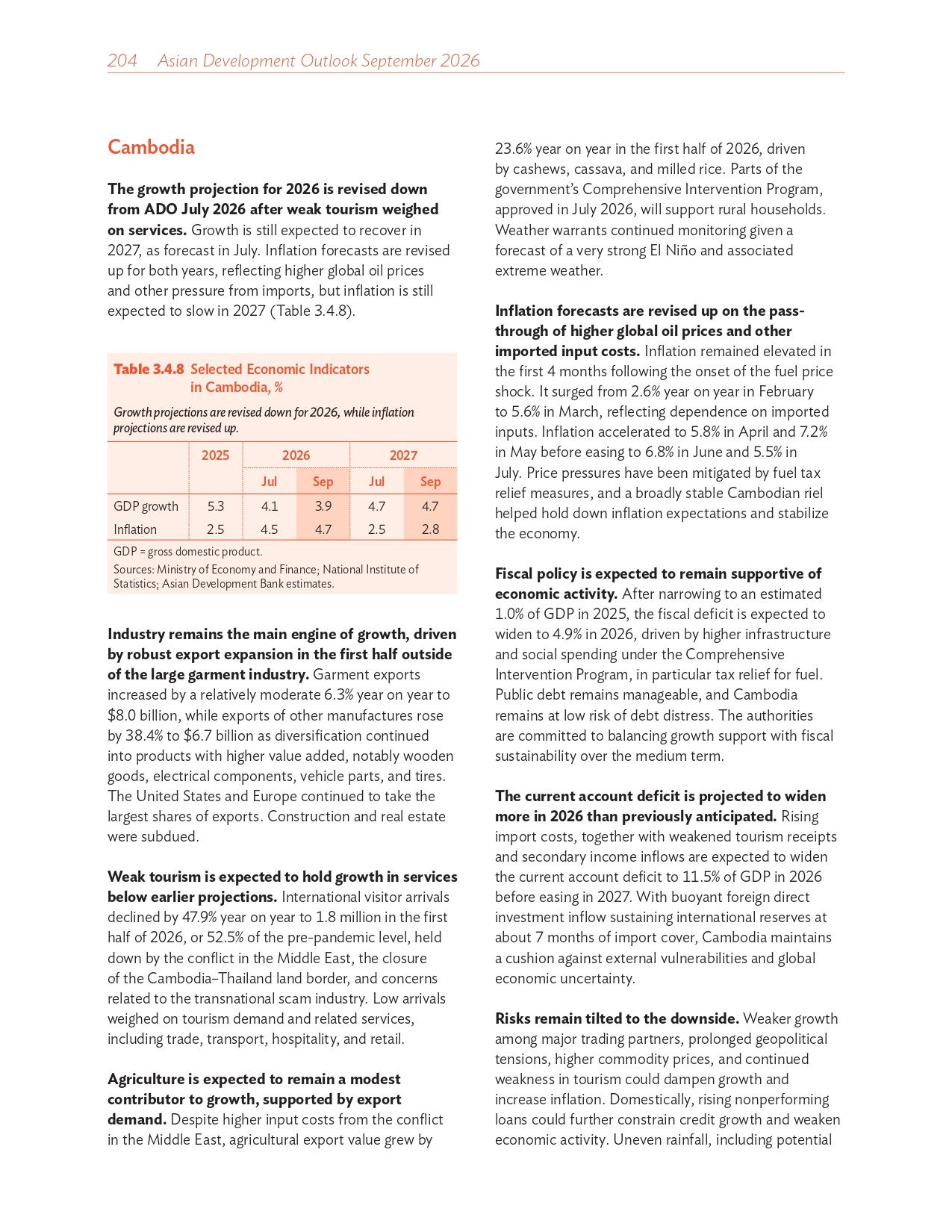

(Phnom Penh): The Asian Development Bank (ADB) has revised Cambodia’s growth forecast to 3.9 per cent in 2026, down from 4.1 per cent projected in July, reflecting weaker-than-expected activity in tourism and related services.
Growth is expected to strengthen to 4.7 per cent in 2027, supported by resilient manufacturing, export diversification, and continued foreign direct investment.
“Cambodia’s economy continues to demonstrate resilience,” said ADB Country Director for Cambodia Yasmin Siddiqi. “Strong manufacturing exports and buoyant investment inflows are helping offset tourism sector challenges. Continued efforts to diversify the economy, enhance competitiveness, support vulnerable households, and strengthen resilience will be important for sustaining inclusive growth.”
According to the Asian Development Outlook (ADO) September 2026 published today by ADB, inflation forecasts have been revised upward, reflecting higher global oil prices and rising import costs. Inflation rose from 2.6 per cent year on year in February to 7.2 per cent in May before easing to 5.5 per cent in July.
ADB forecasts inflation at 4.7 per cent in 2026 and 2.8 per cent in 2027, as fuel tax relief measures and a broadly stable riel help moderate price pressures.
Fiscal policy is expected to remain supportive with infrastructure, human capital, and social protection investments bolstering economic activity through the Comprehensive Intervention Program. The current account deficit is expected to widen in 2026 due to higher import costs and weaker tourism revenue.
However, strong direct foreign investment is expected to continue supporting international reserves.
Industry remains the main driver of growth. Non-garment manufactured exports expanded by 38.4 per cent year on year in the first half of 2026, reflecting increasing diversification into higher-value products, including electrical components, vehicle parts, tires, and wooden goods. Garment exports rose 6.3 per cent to USD 8.0 billion, while construction and real estate remained subdued.
Growth in services is expected to be weaker than previously expected as tourism activity declined. International visitor arrivals fell 47.9 per cent year on year to USD 1.8 million in the first half of 2026, or just over half of pre-pandemic levels.
Ongoing geopolitical tensions and the closure of the Cambodia-Thailand land border weighed on tourism-related activity, including transport, hospitality, and trade. Agriculture is expected to make a modest contribution to growth, supported by demand for exports of cashews, cassava, and milled rice.
Risks to the outlook remain tilted to the downside and included potential El Niño-related weather disruptions in late 2026 and early 2027.
ADB is a leading multilateral development bank supporting sustainable, inclusive, and resilient growth across Asia and the Pacific.
Working with its members and partners to solve complex challenges together, ADB harnesses innovative financial tools and strategic partnerships to transform lives, build quality infrastructure, and safeguard our planet. Founded in 1966, ADB is owned by 69 members, 50 from the region.
=FRESH NEWS