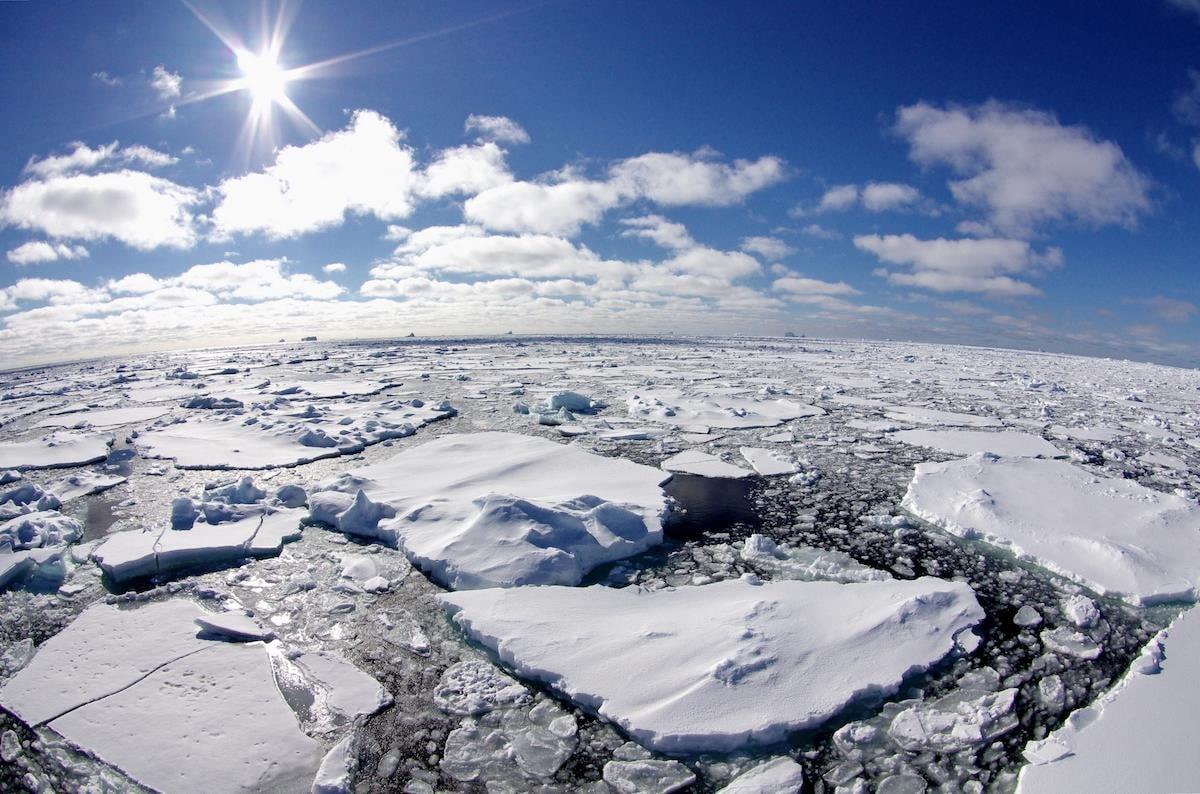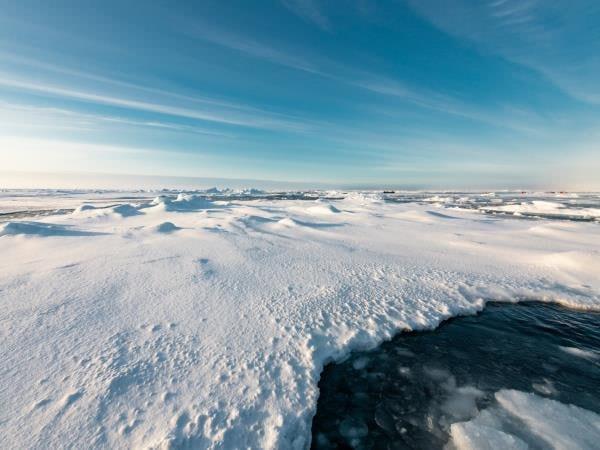

(Phnom Penh): When the Sun rises over Cambodia, temperatures can climb so high that it may feel as though the Sun is unusually close. Yet at the same time, thousands of kilometers away near the poles, vast areas of land and sea can remain covered in ice.
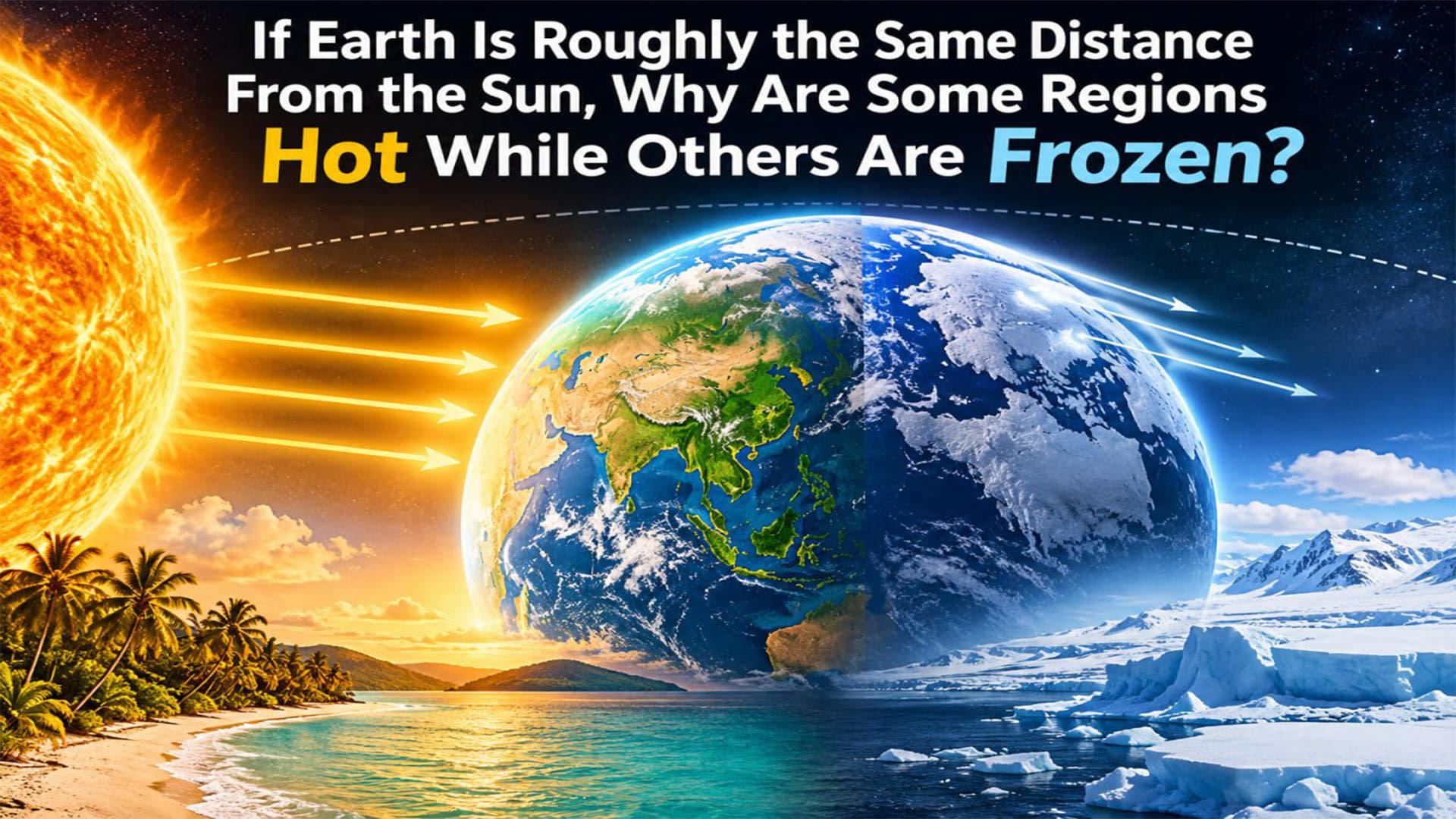
This striking contrast raises a simple question: Earth is one planet, and all regions on its surface are roughly the same distance from the Sun. So why are some places extremely hot while others are cold enough for water to freeze?
The main answer is not distance. It lies in Earth’s spherical shape, the angle at which sunlight reaches its surface, and the 23.5-degree tilt of its axis. The atmosphere, oceans, winds, clouds, elevation and characteristics of the land surface further determine how heat is absorbed, stored and redistributed around the planet.
*Similar Distance Does Not Mean Equal Heating
Earth orbits the Sun at an average distance of about 150 million kilometers. Compared with that enormous distance, the difference between the Sun’s distance from the equator and from the poles is extremely small.
The more important question, therefore, is not “Which region is closer to the Sun?” but “At what angle does sunlight strike Earth’s surface?”
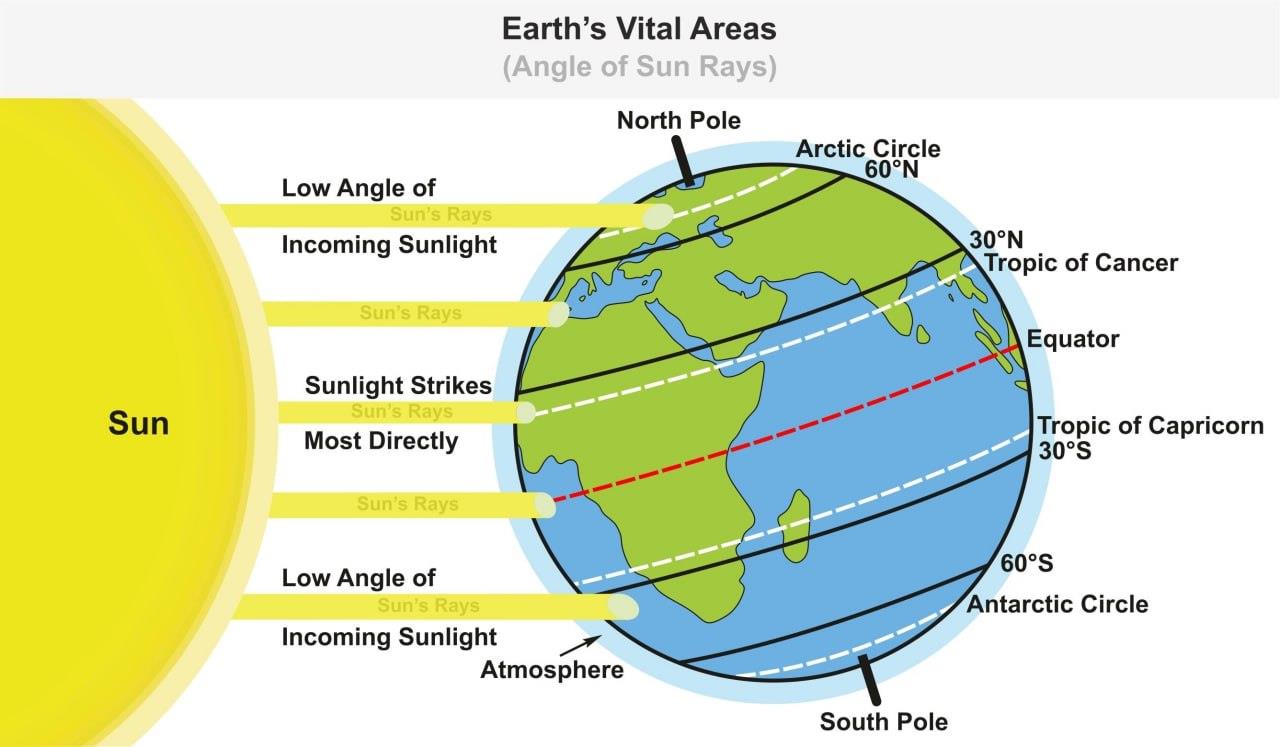
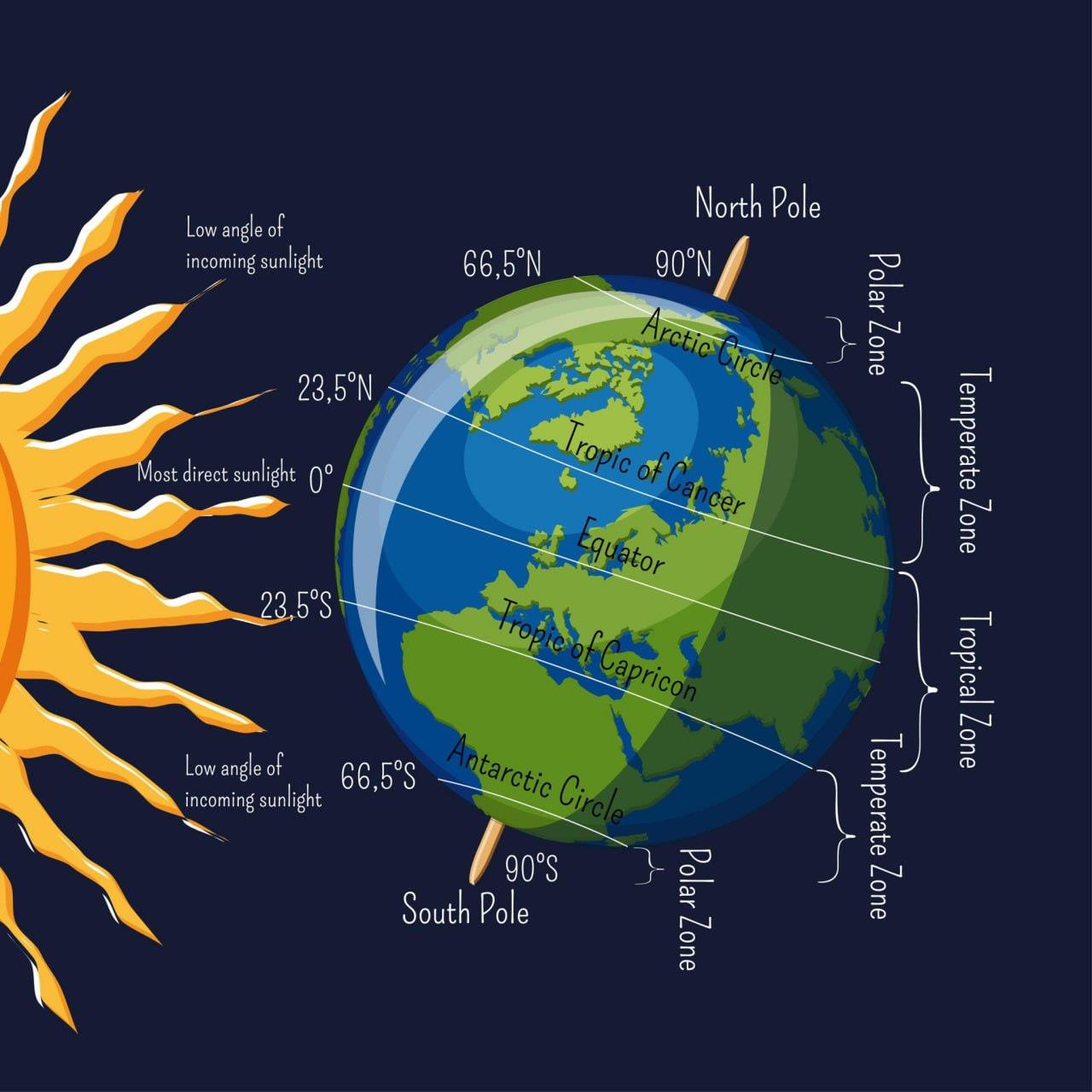
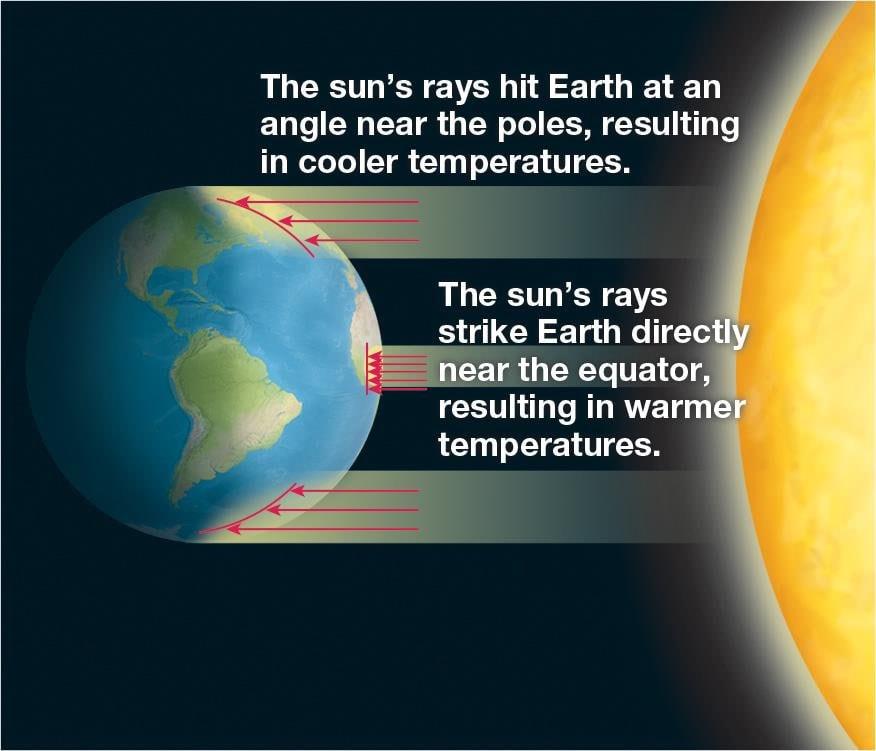
NASA explains that because Earth is spherical, sunlight strikes low-latitude regions near the equator more directly. Solar energy is therefore concentrated over a smaller surface area, producing stronger heating.
Toward the poles, sunlight reaches the surface at a more oblique angle. The same amount of solar energy is spread over a larger area, so each unit of surface receives less energy.
Put simply: the distance is nearly the same, but the angle of sunlight is different — and that makes a major difference in heating.
This is one of the fundamental reasons why a single planet can have hot tropical regions, cold polar regions and major seasonal variations.
*A Flashlight Can Demonstrate the Principle
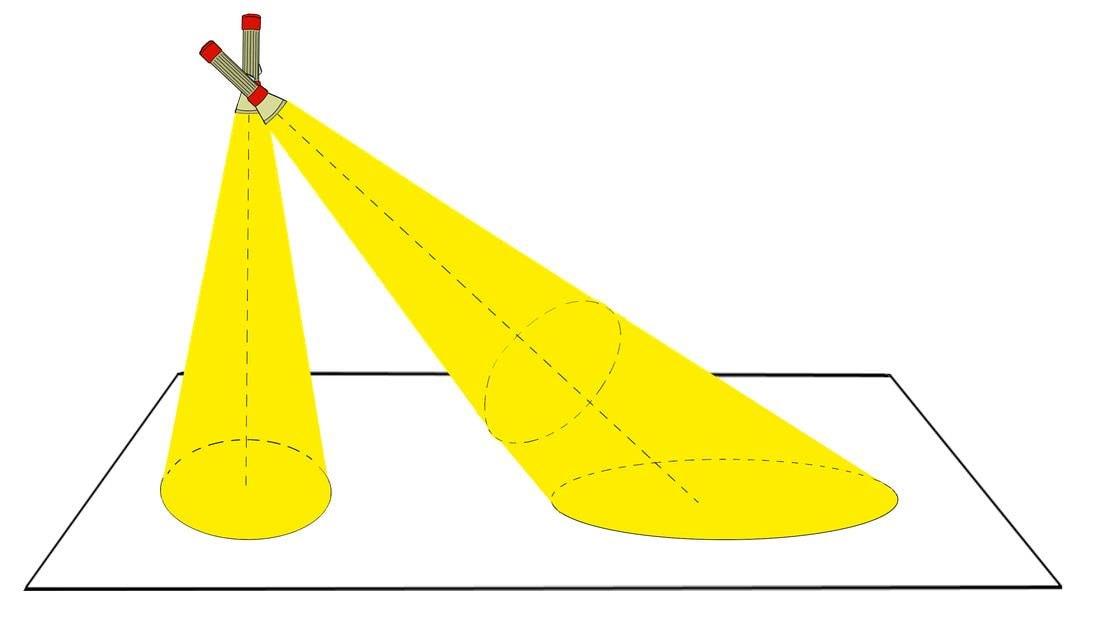
A simple flashlight can help illustrate how this works.
Point a flashlight directly at a wall. Its light is concentrated over a relatively small area and appears bright.
Now tilt the flashlight without changing its power. The same light spreads across a larger area, making the illumination less intense per unit of surface.
The flashlight is not producing less energy. What changes is the area over which that energy is distributed.
A similar principle applies to Earth. More direct sunlight concentrates solar energy over a smaller area, while oblique sunlight spreads it across a larger surface.
*Earth’s 23.5-Degree Tilt Creates the Seasons
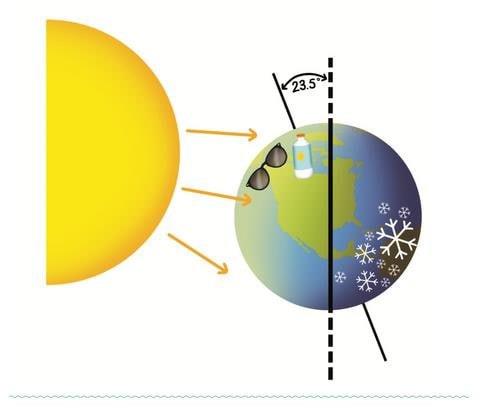
Earth’s spherical shape helps explain why solar heating varies by latitude. But another factor is crucial: Earth’s axis is tilted by about 23.5 degrees.
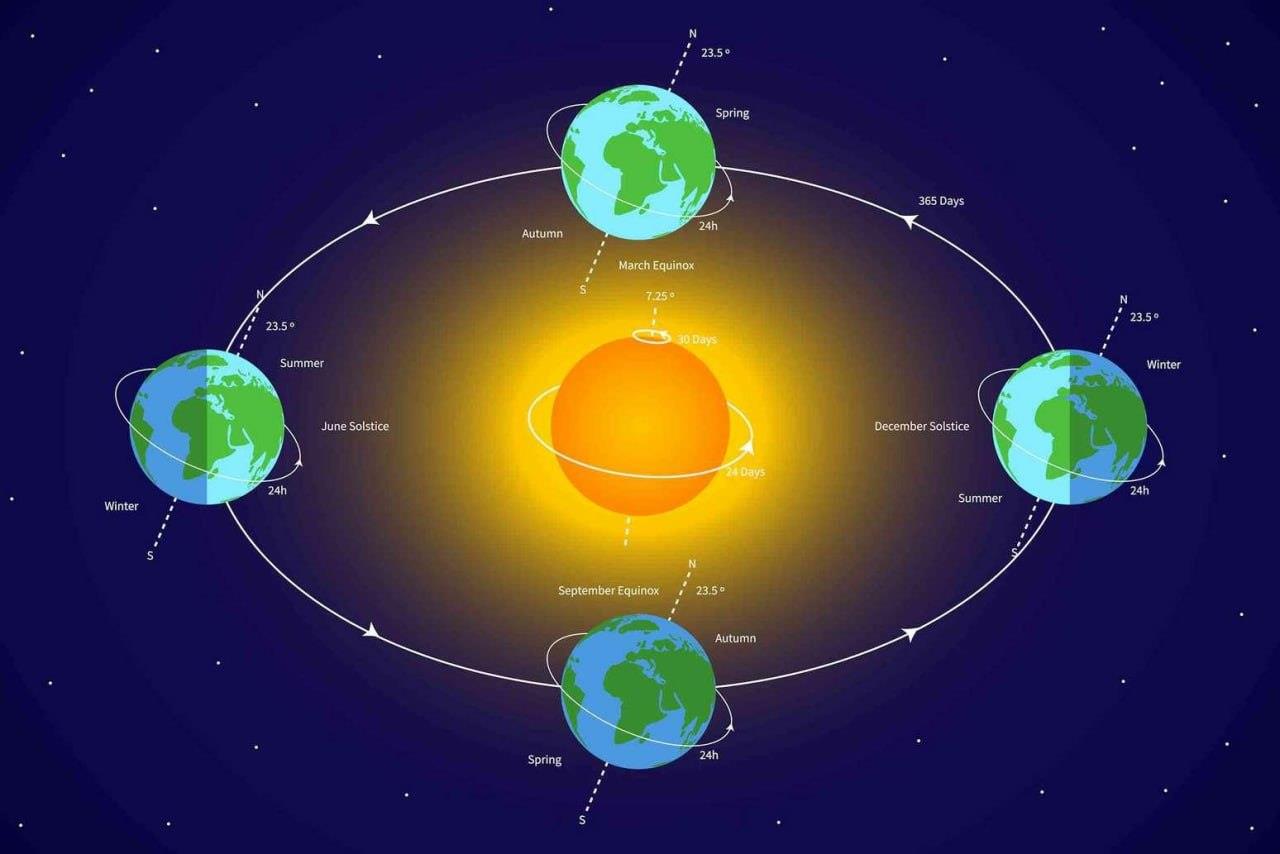
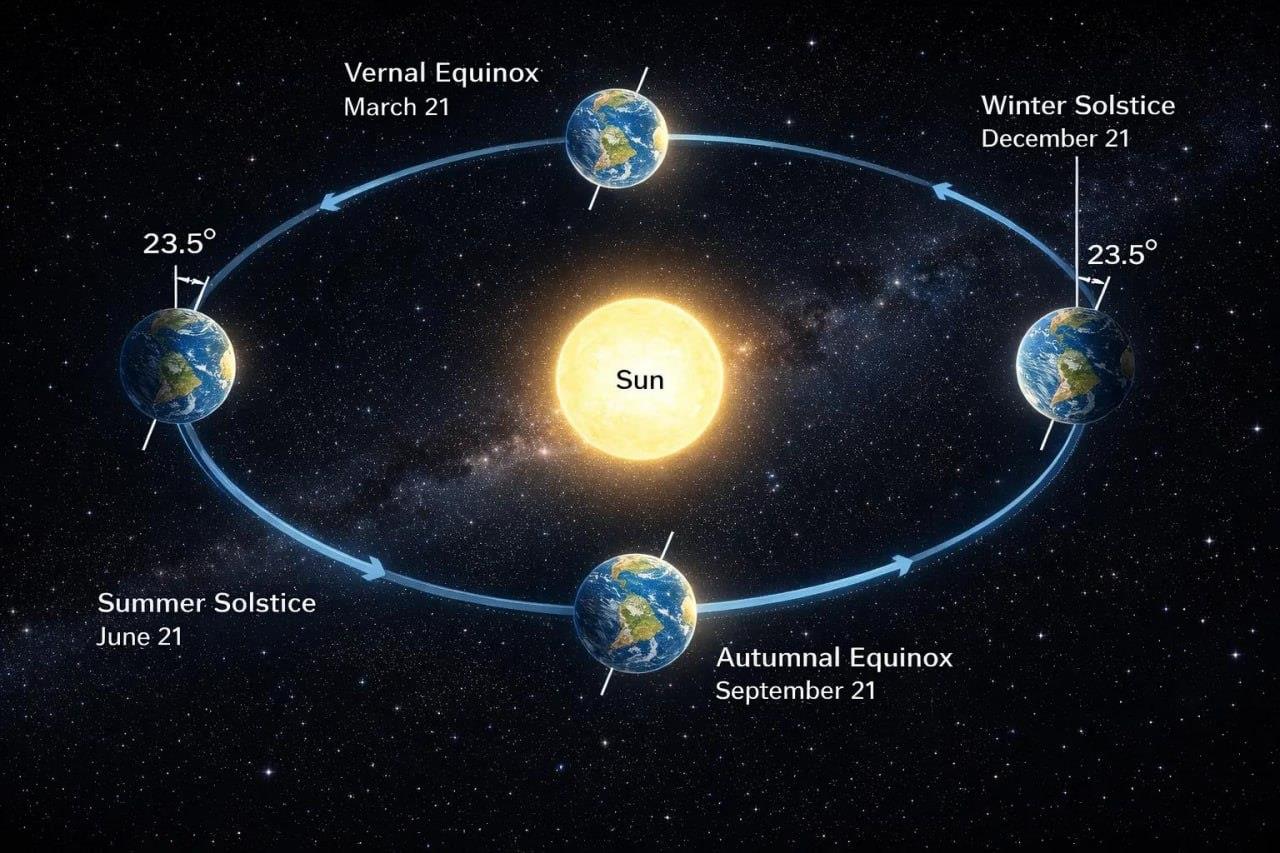
As Earth travels around the Sun, the hemisphere tilted toward the Sun receives more direct sunlight and experiences longer daylight hours. The hemisphere tilted away receives sunlight at a lower angle and has shorter days. This is the primary reason Earth experiences seasons.
Around June, the Northern Hemisphere is tilted toward the Sun, receiving more direct sunlight and longer days, while the Southern Hemisphere experiences the opposite conditions.
About six months later, the situation reverses.
This is why summer and winter are not primarily caused by Earth moving closer to or farther from the Sun. They are mainly the result of Earth’s axial tilt, which changes both the angle of incoming sunlight and the length of daylight throughout the year.
*Earth Has Its Own System for Redistributing Heat
If the equatorial regions receive more concentrated solar energy, why does all that heat not remain there?
The answer is that Earth’s atmosphere and oceans are constantly moving energy around the planet.
NASA describes the interaction of the atmosphere and oceans in redistributing heat as part of Earth’s “heat engine.”
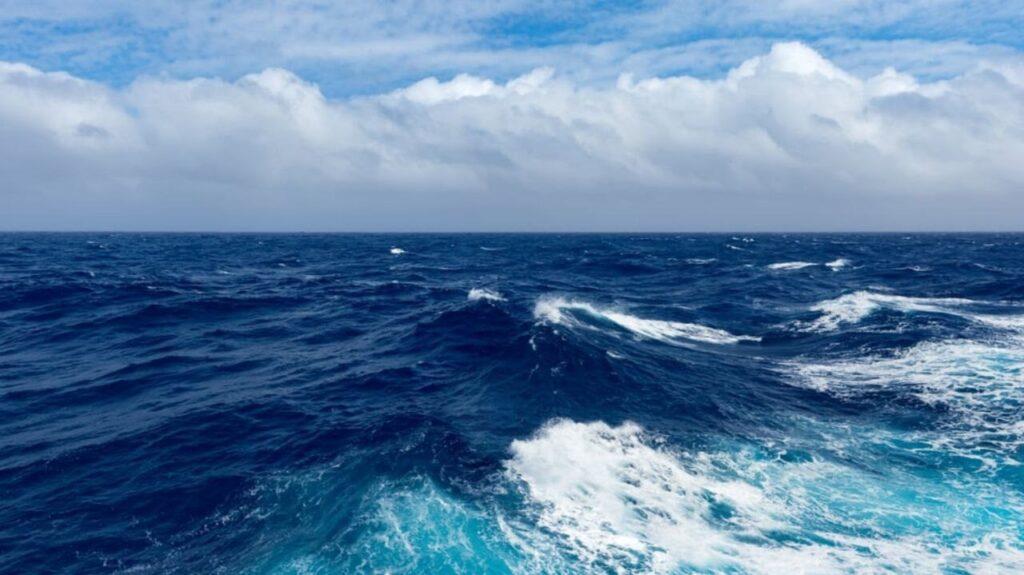
Ocean currents act like enormous conveyor belts for heat. The U.S. National Oceanic and Atmospheric Administration, or NOAA, explains that ocean circulation transports warm water away from the tropics toward higher latitudes while moving colder water in the opposite direction.
This circulation helps moderate temperature differences between different parts of the planet.
The atmosphere performs a similar function. Winds move heat and moisture from one region to another. This is why the climate of a particular place cannot be explained by latitude alone.
*Oceans, Land, Clouds and the Atmosphere Affect How Heat Is Stored
Even two places at similar latitudes can experience very different temperatures.
One important reason is that water and land respond differently to heating.
The oceans can absorb and store enormous amounts of heat. Water generally warms and cools more slowly than land. Coastal regions therefore tend to experience smaller temperature swings than areas deep inside large land masses.
In simple terms, the ocean acts like a vast heat reservoir: it absorbs heat when conditions are warm and releases it gradually as conditions cool. Land, by contrast, tends to heat up and cool down much more quickly.
Clouds also play a dual role. They can reflect incoming sunlight back into space, cooling the surface below. But they can also reduce the amount of heat escaping from Earth into space. Whether clouds produce a net warming or cooling effect depends partly on their type and altitude.
The atmosphere is equally important. Naturally occurring greenhouse gases, including water vapor, carbon dioxide and methane, absorb some of the infrared energy emitted by Earth’s surface and re-emit energy. This natural greenhouse effect keeps Earth substantially warmer than it would otherwise be.
Elevation Can Make Even Tropical Regions Cold
Latitude is not the only factor controlling temperature. Elevation also matters.
High mountains can be much colder than nearby lowlands, even when both are located at the same latitude. In the lower atmosphere, temperatures generally decrease as altitude increases.
That is why high mountains can experience freezing conditions or even snow while surrounding lowlands remain warm.
This again demonstrates that although the Sun is Earth’s fundamental source of energy, geography, the atmosphere and the oceans determine how that energy is distributed and experienced across the planet.
*Conclusion: One Earth, One Sun — But Unequal Heating
Earth is one planet orbiting one Sun, and the difference in distance from the Sun between different locations on its surface is tiny compared with the roughly 150 million kilometers separating Earth from the Sun.
Yet different regions do not receive and retain solar energy equally.
Earth’s spherical shape causes sunlight to strike the surface at different angles, while its 23.5-degree axial tilt changes the angle and duration of sunlight throughout the seasons. The atmosphere, oceans, winds, clouds, elevation and land surface then redistribute and retain that energy in different ways.
So the answer does not lie simply in how far a place is from the Sun. It lies in how Earth receives, stores and redistributes the Sun’s energy.
One Sun, one Earth — but different ways of receiving and distributing solar energy create very different temperatures across our planet.