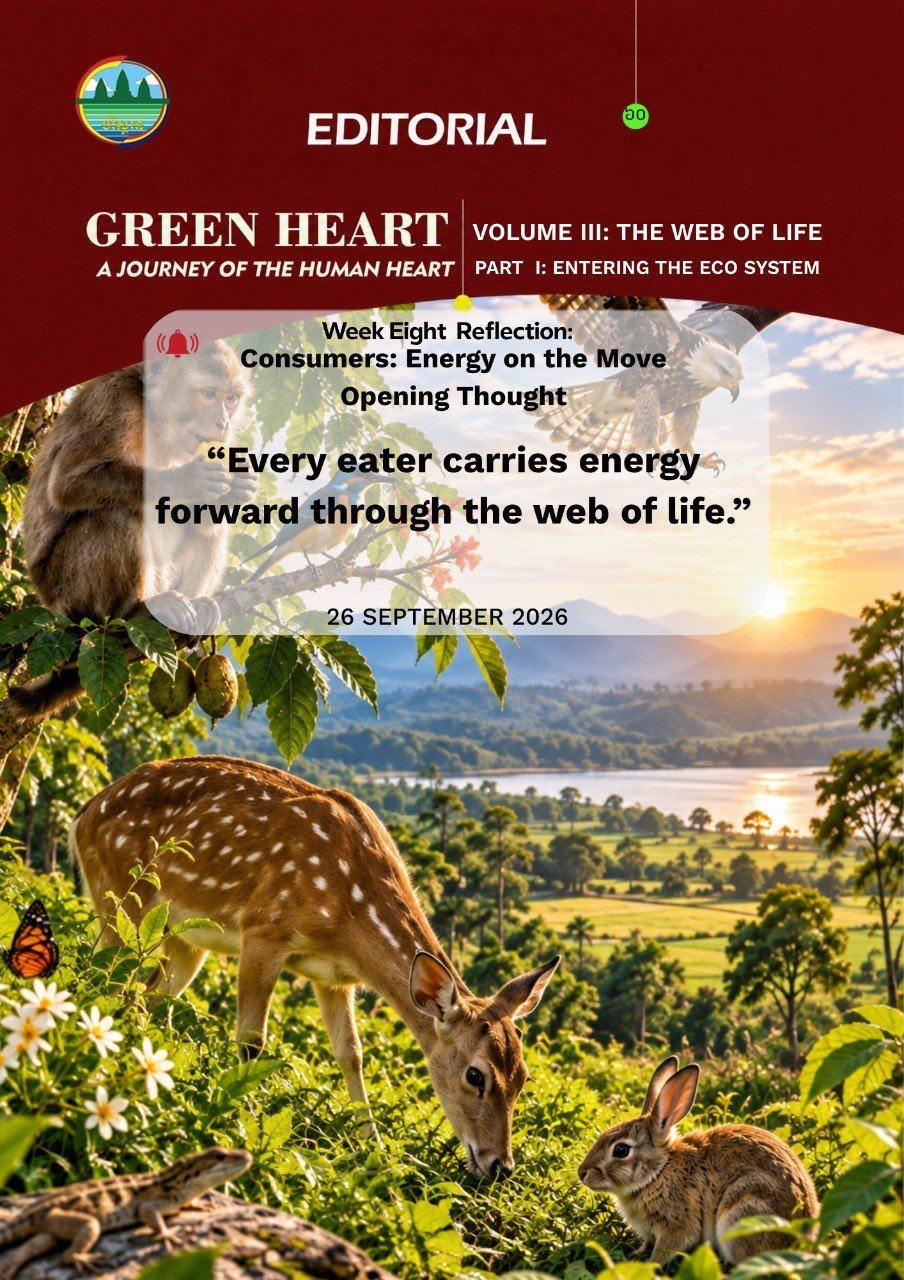

(Phnom Penh): Animals, fungi, many microorganisms, and people cannot make their own food from sunlight or inorganic chemicals. We obtain energy and materials by consuming other organisms or organic matter. Ecologists call us consumers.
“Every eater carries energy forward through the web of life.”
Herbivores eat plants or algae. Carnivores eat other animals. Omnivores eat both plant and animal foods. Parasites live in or on hosts and take resources. Scavengers feed on dead animals. These categories can overlap, and diets may change with age, season, or availability.
Consumers move energy through ecosystems. A deer turns leaves into muscle and movement. A caterpillar transforms plant tissue into a body that may feed a bird. A fish may carry nutrients between habitats as it migrates.
Eating also shapes communities. Grazers influence plant growth. Predators affect prey behavior and abundance. Fruit-eating animals may disperse seeds. Burrowing animals move soil. A consumer is therefore not merely taking; through living, it changes the system.
Population changes can create wider effects. If a predator declines, some prey may increase. If a seed-dispersing animal disappears, certain plants may reproduce less successfully. Results vary because ecosystems contain many interacting factors.
Human beings are powerful consumers. Our choices influence land, water, fisheries, energy, waste, and livelihoods far beyond the meal itself. Responsible consumption includes avoiding waste, supporting sustainable practices where possible, eating a balanced diet consistent with health needs, and respecting the people who produce food.
No diet is environmentally identical everywhere. Local climate, production methods, transport, culture, nutrition, and available choices matter. Simple accusations ignore complexity. The Green Heart invites informed improvement, not judgment.
Consumers also have limits. No population can grow forever in a limited environment. Food, water, space, disease, competition, predators, and climate all influence numbers.
Understanding these limits helps us manage wildlife, livestock, fisheries, and human systems wisely.
At your next meal, remember that energy is moving. Your body will use it to think, learn, work, and care. Let the energy you receive continue into actions that reduce suffering and protect the web that fed you.
This turns consumption into responsibility. We cannot live without taking energy from other life, but we can choose moderation, reduce waste, respect safe and sustainable production, and use our strength for benefit rather than careless excess.
Different consumers also need different amounts and qualities of food. Protecting a species therefore requires understanding its diet across seasons and life stages, not merely assuming that any available food will be enough.
Buddhist Reflection
Mindful consumption asks what we receive, how much we need, and what consequences follow. Eating is necessary, but it can be guided by gratitude, moderation, and compassion rather than carelessness.
Today’s Reflection
How does one consumer change its ecosystem beyond simply eating?
Today’s Action
Choose one local animal and list its food, its predators, and two other ways it affects the ecosystem.
Today’s Pledge
Today I will receive energy with gratitude and return it through responsible action.
When we protect nature, we protect all beings, including ourselves.
=FRESH NEWS