
(Phnom Penh): A simple food chain might read: grass, grasshopper, frog, snake, eagle. The arrows show energy moving from one organism to the next. The chain is useful for learning, but real ecosystems are more complex.
A grasshopper may eat several plants. A frog may eat many kinds of insects. A snake may eat frogs, rodents, birds, or other prey. Eagles may feed on different animals. Decomposers interact with every level. When many chains cross, they form a food web.
Food webs show both dependence and flexibility. If one food source becomes scarce, a generalist consumer may switch to another. A specialist with narrow needs may have fewer options. The effect of change depends on which species, relationships, and alternatives remain.
Arrows in food webs are often misunderstood. Usually, they point from the organism being eaten toward the eater because they track energy transfer. Remembering this direction helps us read the diagram correctly.
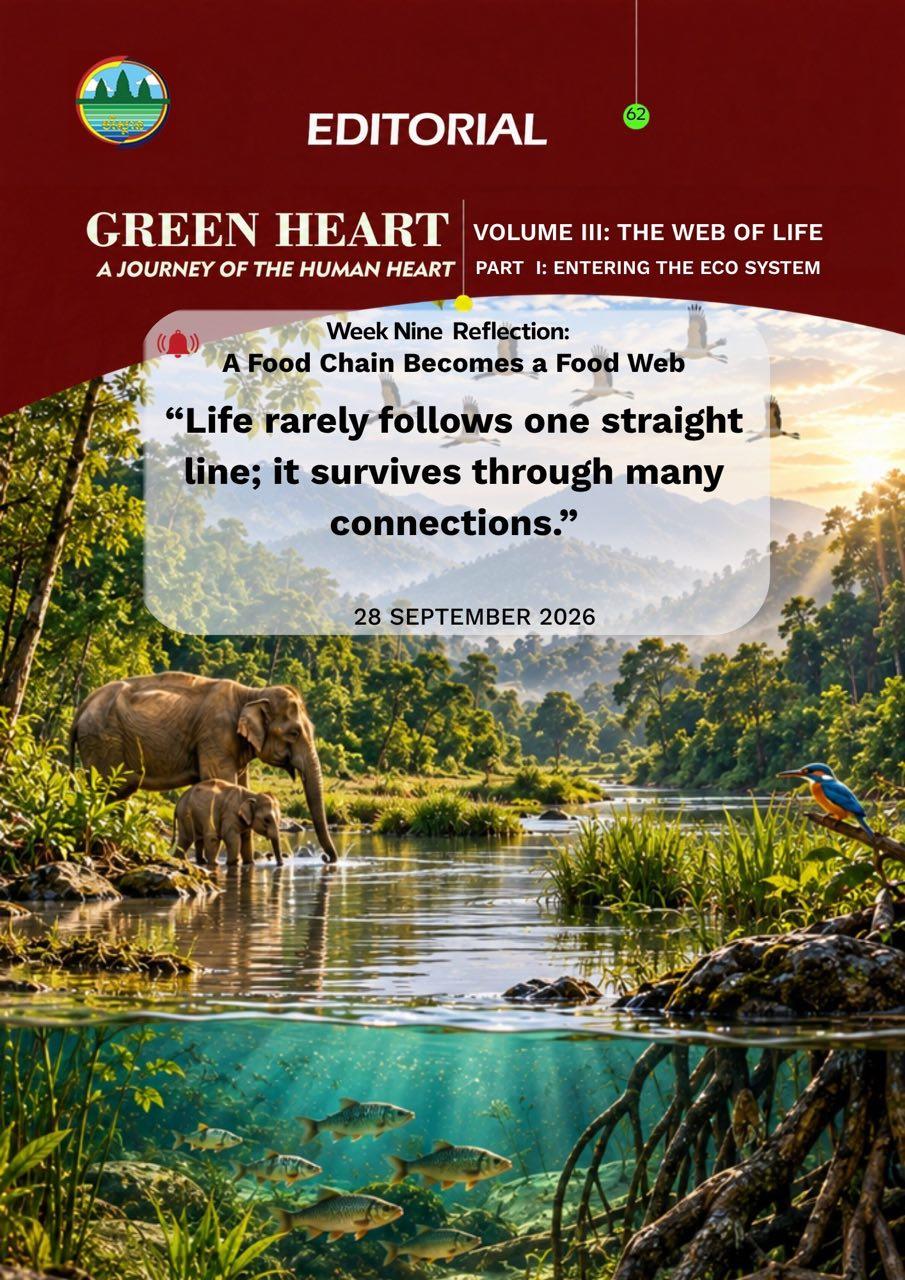
Food webs also extend across habitats. Leaves falling into a stream can feed aquatic organisms. Insects emerging from water may feed birds or bats on land. Migrating fish transport nutrients. Boundaries become pathways.
Pollution can move through webs too. Some persistent substances accumulate in organisms and may become more concentrated at higher feeding levels, a process called biomagnification. Preventing such pollution protects species far from the original source.
Removing or adding a species can change the web, but outcomes are not always predictable. Scientists use field observations, experiments, models, and long-term monitoring to understand these effects. Humility is essential.
Humans occupy many positions in food webs. We eat plants, animals, fungi, and products created through microorganisms. Our agriculture and fisheries reshape webs, while our health depends on their productivity.
Draw a food chain, then add one more food for each consumer and one more eater for each producer. The neat line quickly becomes a network.
This network is not disorder. It is the many-threaded fabric of survival. Protecting biodiversity keeps more of those threads available when conditions change.
A web diagram is still only a model. It cannot display every seasonal diet, life stage, parasite, or microbial relationship. Models remain useful when we remember their limits. They guide questions rather than replacing the living system itself.
Compare two models of the same web and notice what each includes or omits. Scientific understanding advances by improving these representations as evidence grows, not by pretending the first drawing is final.
Buddhist Reflection
Interdependence is not a single line of cause and effect. Many causes meet, and one action may spread through many paths. Wisdom remains careful because the full web exceeds our immediate view.
Today’s Reflection
What does a food web reveal that a single food chain hides?
Today’s Action
Expand one food chain into a web of at least ten organisms, including a producer and decomposer.
Today’s Pledge
Today I will honor the many connections through which life receives and shares energy.
When we protect nature, we protect all beings—including ourselves.
=FRESH NEWS