
(Kampong Speu): A recent social media post by a climate change specialist has drawn fresh attention to the natural beauty and ecotourism potential of Kampong Speu, describing the province as a “hidden gem” within easy reach of Phnom Penh.
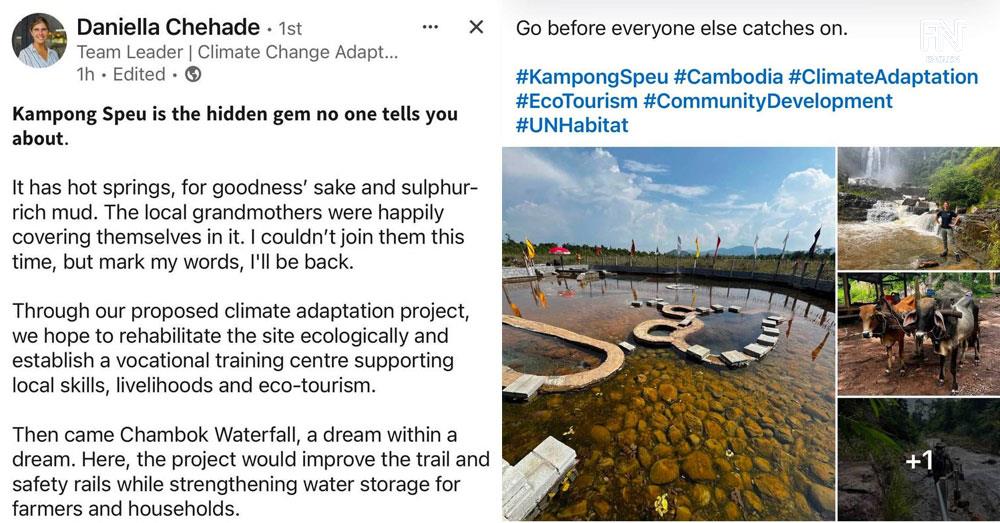
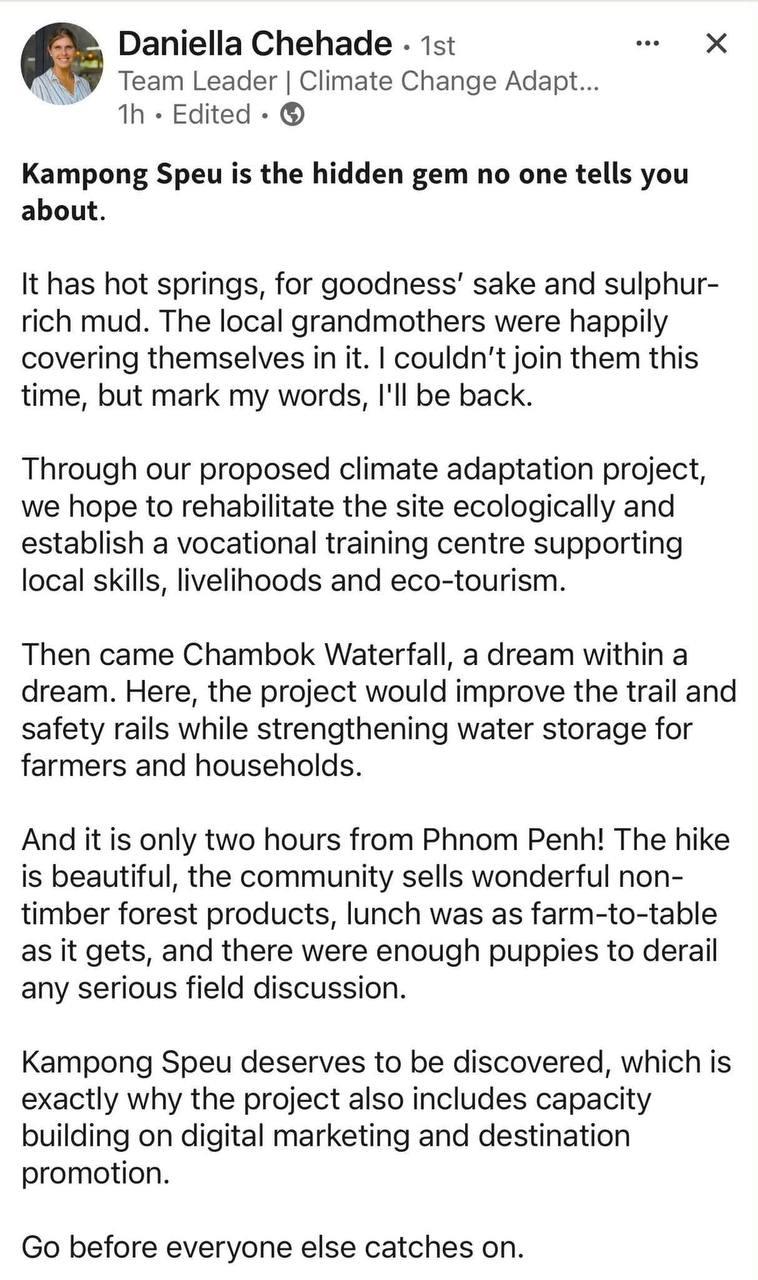
Daniella Chehade, a climate change adaptation team leader, shared her impressions after visiting natural and community tourism sites in the province, including hot springs and Chambok Waterfall.
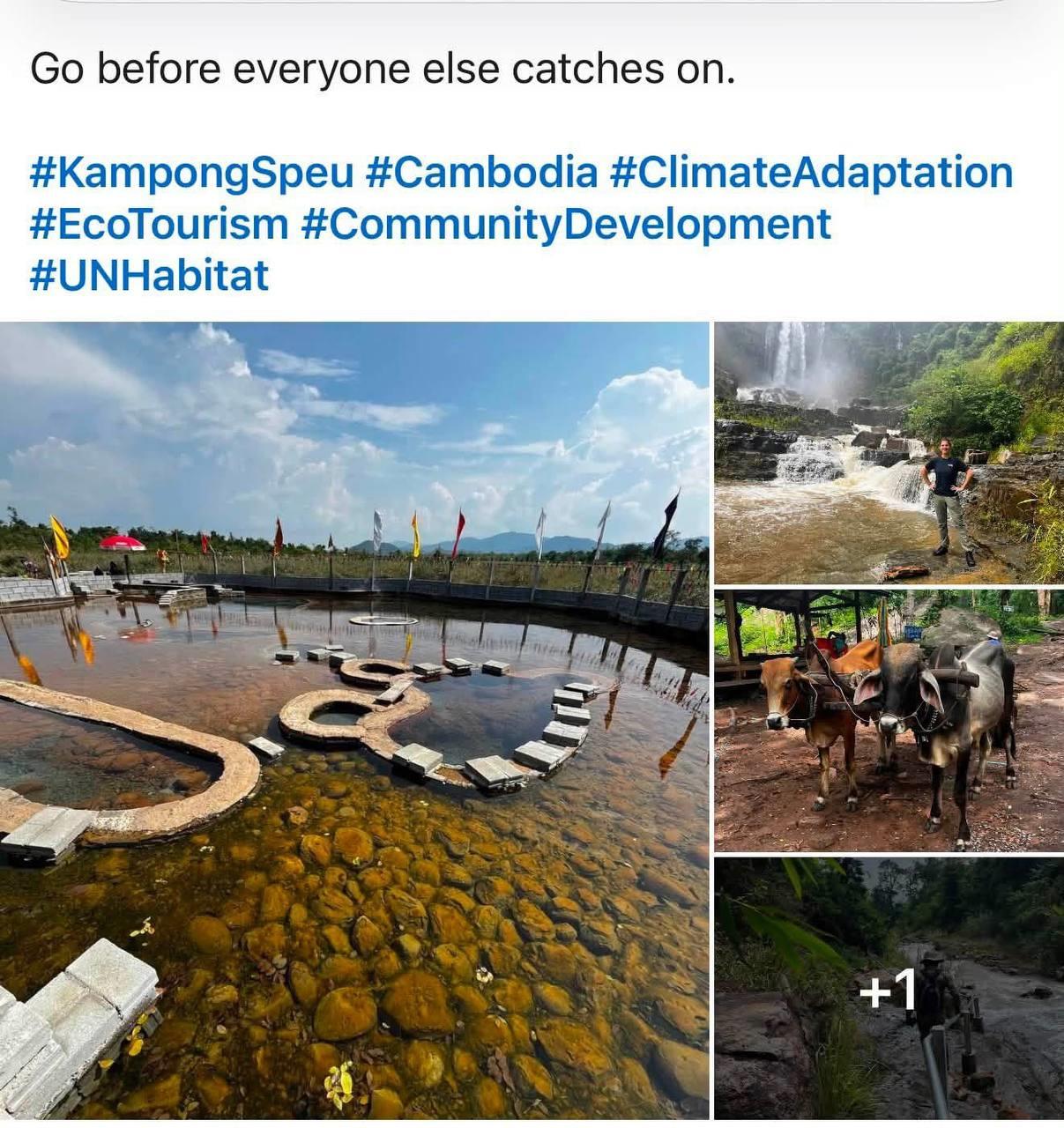
She described the hot springs, with their sulfur-rich mud, as a distinctive local attraction. She also highlighted a proposed climate adaptation project aimed at ecologically rehabilitating the site and establishing a vocational training center to strengthen local skills, livelihoods and ecotourism.
At Chambok Waterfall, Chehade praised the landscape and community experience. The proposed project would improve walking trails and safety rails while strengthening water storage for farmers and households.
Her visit also highlighted something increasingly important for Cambodia: natural attractions can be more than beautiful places to visit. When carefully managed, they can support climate resilience, strengthen communities and provide sustainable sources of income.
Chehade concluded that Kampong Speu “deserves to be discovered.”
But there is another hidden gem in Kampong Speu that she may not know yet Knorng Psar.
Set among mountains, forests and grass-covered highlands, Knorng Psar offers a different experience. Visitors hike through natural landscapes to reach sweeping mountain views, often surrounded by mist and clouds. Its relative remoteness is part of its appeal.
Knorng Psar is also becoming an example of how environmental conservation and community development can work together.
About 5,000 people visited the destination in 2025. In just three months of 2026, about 20,000 visitors traveled to Knorng Psar, four times the number recorded during the entire previous year.
The rapid increase is creating opportunities for local people to earn income through guiding, transportation, food, accommodation and other tourism-related services.
The transformation carries an important message: A standing forest can have greater and more lasting value to a community than a forest that is cut down.
When communities can earn sustainable incomes from visitors who come to experience forests, mountains, clean air, wildlife and natural landscapes, conservation becomes directly connected to their livelihoods.
The vision for Knorng Psar, therefore, is not simply to attract more tourists. It is to develop a green destination where nature is protected, communities benefit and visitors learn to appreciate the value of Cambodia’s natural heritage.
Plans for the area include an information center, first-aid services, community markets, parking areas, washrooms and improved walking trails. Community participation is central to the model so that tourism revenue can remain connected to local livelihoods.
Together, the hot springs, Chambok Waterfall and Knorng Psar reveal the diversity of Kampong Speu. One offers mineral-rich waters, another waterfalls and community forests, while Knorng Psar provides mountain landscapes and an emerging model of community-based ecotourism.
They also demonstrate how climate adaptation, environmental protection, tourism and rural development can reinforce one another.
Kampong Speu may still be a hidden gem to many visitors, but perhaps not for much longer.
Chehade ended her post with a simple invitation: “Go before everyone else catches on.”
There may now be one more destination to add to that invitation.
On her next journey to Kampong Speu, Knorng Psar, high among the mountains, forests and clouds, will be waiting to be discovered.
=FRESH NEWS