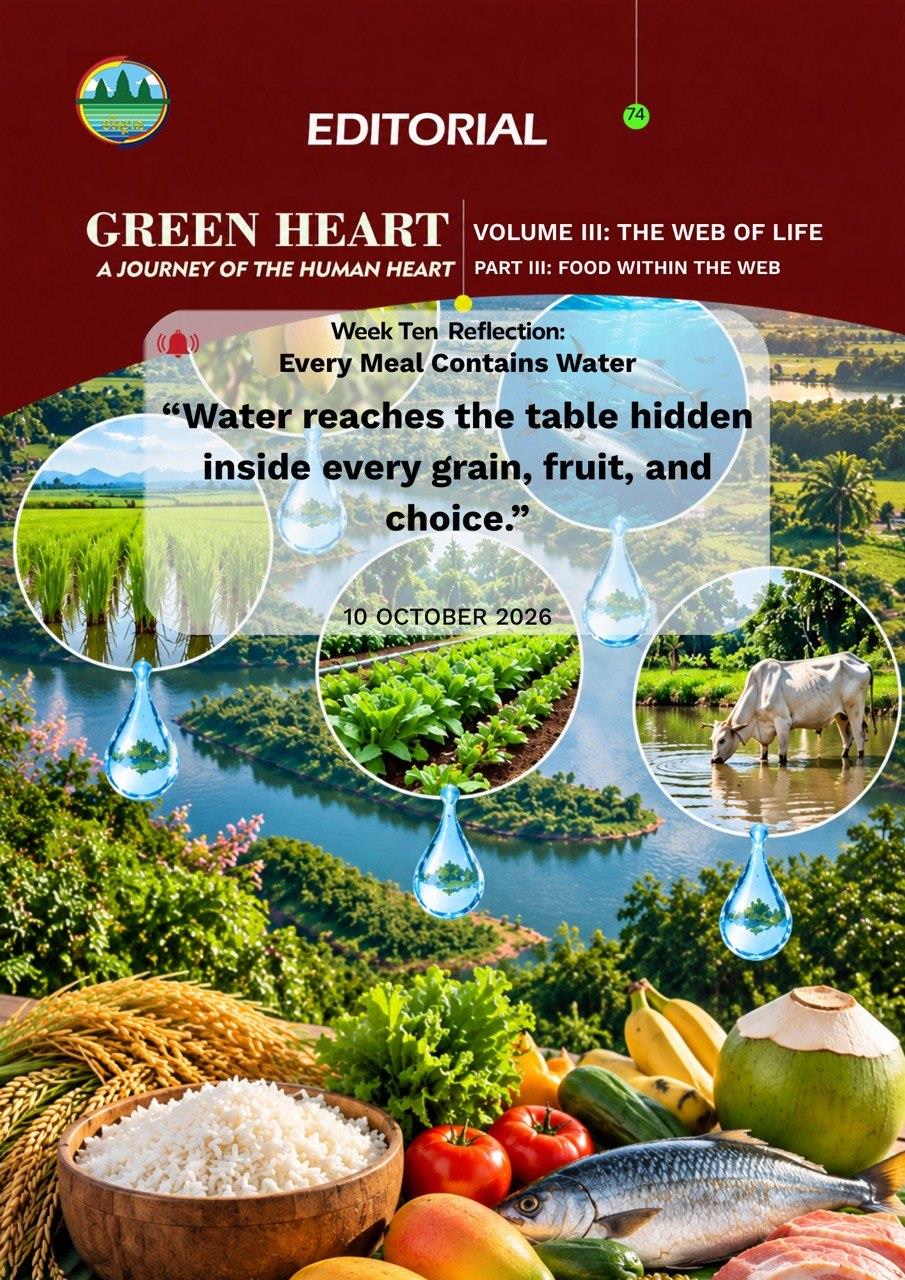

(Phnom Penh): We drink water directly, but we also consume it indirectly through food production. Crops need rainfall or irrigation. Livestock need drinking water and feed grown with water. Processing, cleaning, transport, and cooking also use water.
The total water associated with a product is sometimes called its water footprint. The concept can help compare uses, but simple numbers may mislead. Water taken from a rainy region is different from water taken from a scarce river or depleted aquifer. Timing, source, pollution, and local ecology matter.
Efficient irrigation methods can reduce losses in some settings. Soil moisture monitoring, suitable crop choice, scheduling, mulching, canal maintenance, and water pricing or rules may also help. Technology works best when paired with farmer knowledge and fair access.
Rain-fed agriculture remains vital across much of the world. Protecting soil and vegetation can help rainfall enter and remain in the root zone. Drought preparedness includes crop diversity, forecasting, storage, insurance, and community planning.
Water use for food should not become a reason to blame farmers or particular diets without context. Nutrition, culture, livelihoods, land, climate, and production methods all influence impact. Responsible choices require local information.
Food waste is also water waste. When rice, fruit, meat, or vegetables are discarded, much of the water used along the chain provided no nourishment. Taking suitable portions is one of the simplest ways students can respect hidden water.
Water quality matters alongside quantity. Fertilizer, manure, soil, pesticides, and processing waste can enter waterways if poorly managed. Buffer zones, correct application, sanitation, and treatment help protect downstream users.
Climate change affects both supply and demand. Hotter conditions may increase crop water needs while rainfall becomes less predictable in some regions. Adaptation must protect food security and ecosystems together.
At your next meal, imagine the rain, irrigation, soil moisture, and human labor held invisibly within it. You are not only eating food. You are receiving part of a watershed.
Let gratitude for the meal become careful use of both food and water.
Care can begin before cooking. Plan quantities, choose foods suited to the season when practical, wash efficiently, and reuse safe water for appropriate non-drinking purposes. Small kitchen habits become meaningful when practiced without compromising hygiene.
At the community level, repairing leaks and improving irrigation may save far more water than household changes alone. Personal action should build support for these larger improvements rather than hide their importance.
Buddhist Reflection
Mindfulness reveals hidden inputs behind visible goods. When we see the water, labor, and life within a meal, moderation becomes gratitude in action rather than a rule imposed from outside.
Today’s Reflection
Which food on my plate likely required water at the greatest number of stages?
Today’s Action
Finish a safe, suitable portion and trace one ingredient through rain or irrigation, processing, cooking, and cleaning.
Today’s Pledge
Today I will honor the hidden water in food by wasting less and choosing thoughtfully.
When we protect nature, we protect all beings—including ourselves.
=FRESH NEWS