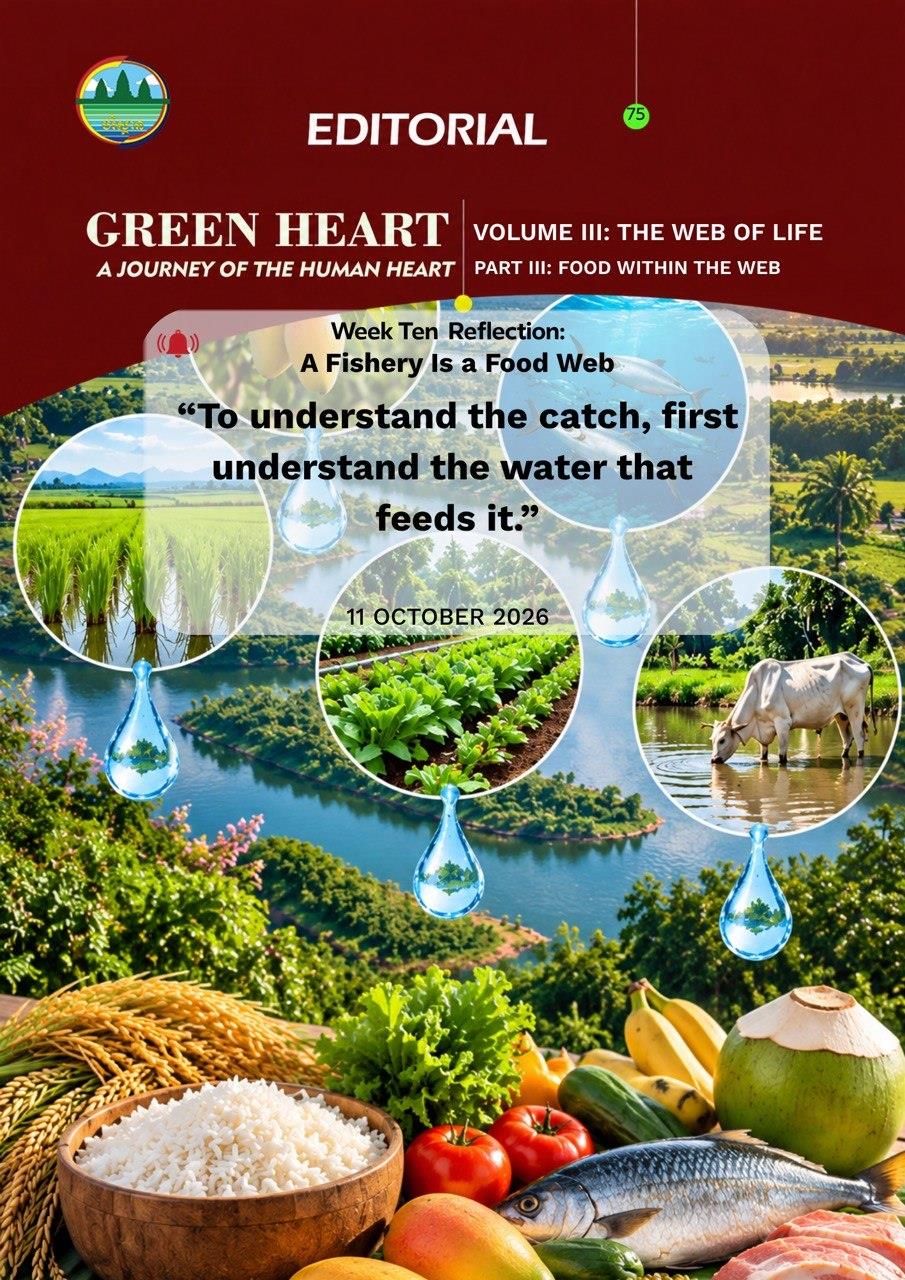

(Phnom Penh): A fishery is not only boats, nets, hooks, markets, and fish. It begins with habitat, water quality, food, reproduction, migration, predators, competitors, and climate.
“To understand the catch, first understand the water that feeds it.”
Phytoplankton, algae, and aquatic plants support food webs.
Small animals feed on producers or detritus. Fish eat plankton, plants, invertebrates, or other fish. Birds, mammals, reptiles, and people feed at different levels.
Fish populations depend on birth, growth, movement, and death.
Removing fish faster than the population can replace them may lead to decline. But measuring this balance is difficult because fish move, conditions change, and data may be limited.
Habitat matters throughout the life cycle.
Floodplains, mangroves, seagrass beds, coral reefs, deep pools, gravel beds, and open water serve different species and stages.
Protecting only the adult fishing ground may ignore nursery or spawning areas.
Inland fisheries connect rivers, lakes, wetlands, seasonal floods, and communities. Marine fisheries connect coasts, currents, offshore waters, and international markets.
Dams, pollution, habitat loss, climate change, and invasive species can affect catches alongside fishing pressure.
Fishers hold valuable observations about seasons, locations, behavior, and change. Scientific surveys add measurements of abundance, age, growth, reproduction, and ecosystems.
Strong management respects both, while testing conclusions carefully.
Aquaculture raises fish, shellfish, seaweed, or other aquatic organisms. It can provide food and livelihoods but may affect water, feed resources, disease, habitat, and wild populations.
Practices vary widely, so broad labels are unhelpful.
Consumers join the web through purchasing and waste.
Choosing legally caught or credibly certified products where available, respecting closed seasons and size limits, and using food fully can support better outcomes.
Fishing is both livelihood and culture. Management that ignores food security and fairness may fail. Conservation works best when communities participate and benefits are shared.
The fish on a plate is the visible end of an invisible web. Protect the water, habitat, migration, food, and people, and the fishery has a future.
Fisheries information is often uncertain. Responsible management can use precaution when evidence is incomplete, then adjust rules as monitoring improves.
Waiting for perfect certainty may allow decline to become harder and more expensive to reverse.
This approach is called adaptive management: act using the best available knowledge, monitor results, and revise.
Humility becomes part of the system instead of a reason for inaction.
Clear goals and public records help communities judge whether each adjustment is working.
Learning then becomes part of every season’s catch.
Buddhist Reflection
Right livelihood asks how human needs can be met with responsibility and reduced harm.
Fisheries show that compassion must include aquatic life, fishing families, consumers, and future generations.
Today’s Reflection
Which habitat does a fish need before it becomes part of a catch?
Today’s Action
Choose one local fish species and research its food, breeding habitat, migration, and legal protections.
Today’s Pledge
Today I will see every fishery as a living web and support its renewal.
When we protect nature, we protect all beings, including ourselves.
=FRESH NEWS